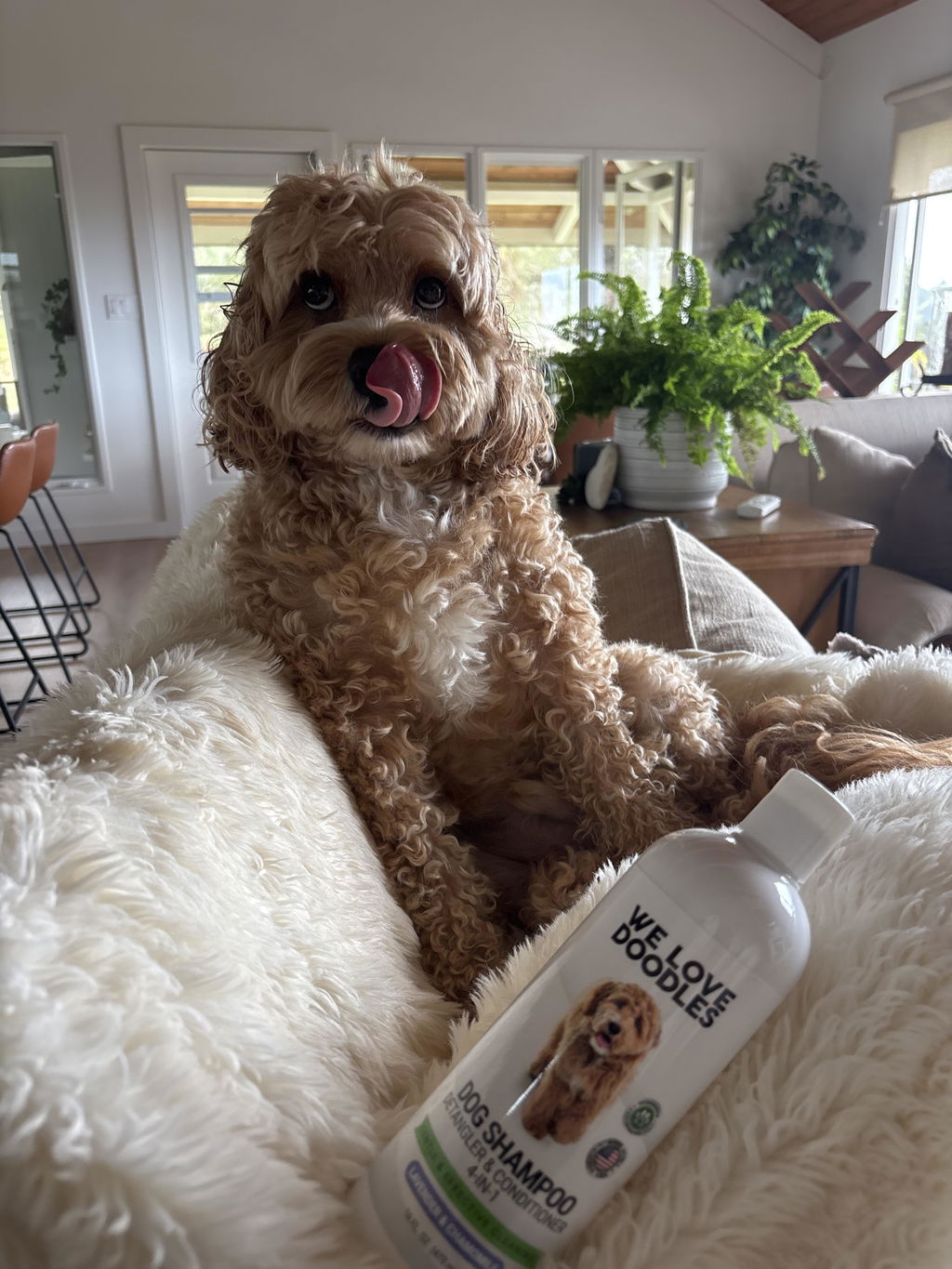
Boxerdoodle Grooming Guide
🐾 The Complete Boxerdoodle Grooming Guide
What is a Boxerdoodle? A Boxerdoodle — also called a Boxer Poodle mix — is a designer crossbreed created by pairing a purebred Boxer with a Poodle. The result is an energetic, loyal, and surprisingly low-shedding companion that blends the Boxer's playful athleticism with the Poodle's intelligence and curly, allergy-friendlier coat.
Why This Guide Exists: Boxerdoodles are growing in popularity, but grooming advice specific to this mix is hard to find. Most guides lump them in with Goldendoodles or Labradoodles, which doesn't account for the Boxer's short, dense undercoat genetics. This guide gives you everything — coat types, brushing schedules, tools, and real owner experiences — so your Boxerdoodle stays comfortable, mat-free, and looking their best at every life stage.

Source: @beantheboxerdoodle
What Is a Boxerdoodle, and How Does Their Genetics Affect Grooming?
A Boxerdoodle is the offspring of a Boxer and a Poodle — most commonly a Standard Poodle, though Miniature Poodle crosses (producing a smaller "Mini Boxerdoodle") do exist. Unlike some designer breeds, the Boxerdoodle hasn't been bred for as many generations, which means coat outcomes are less predictable than in established lines like the Goldendoodle or Bernedoodle.
Understanding the parent breeds matters because it tells you exactly what you're brushing. Boxers have a short, smooth, tight-fitting coat with minimal grooming needs on their own. Poodles, by contrast, have a dense, continuously growing curly or wavy coat that requires consistent maintenance. When these two genetics combine, the result depends heavily on which parent's coat genes dominate.
According to the American Kennel Club (AKC), Poodles rank among the top breeds for low-shedding coats due to their single-layer, continuously growing hair — a trait that passes on in varying degrees to Poodle crossbreeds. The more Poodle in the mix, the more grooming your Boxerdoodle will need. That's not a flaw; it's a trade-off owners should be prepared for before bringing one home.
Boxerdoodle Generations and What They Mean for Your Brush
| Generation | Parentage | Poodle % | Likely Coat | Shedding | Grooming Demand |
|---|---|---|---|---|---|
| F1 Boxerdoodle | Boxer × Poodle | 50% | Wavy or loosely curly | Moderate | Medium — brush 3–4x per week |
| F1B Boxerdoodle | F1 Boxerdoodle × Poodle | 75% | Curly or wavy | Low | High — daily brushing needed |
| F2 Boxerdoodle | F1 × F1 Boxerdoodle | ~50% | Variable (wavy/curly/straight) | Low–Moderate | Medium — depends on coat outcome |
| Mini Boxerdoodle | Boxer × Miniature Poodle | 50% | Wavy or short-wavy | Moderate | Medium — 3x per week minimum |
Which Coat Type Does Your Boxerdoodle Have? Here's How to Tell.
Identifying your Boxerdoodle's coat type is the single most important step in building the right grooming routine. The wrong brush for the wrong coat wastes your time and can actually cause discomfort. Based on reported outcomes from Boxerdoodle owners and breeders, three coat types emerge most commonly.
🌊 Wavy / Fleece Coat
Most Common In: F1 Boxerdoodles
What It Looks Like: Soft, loose waves that fall away from the body. This coat sits between the Boxer's smooth coat and the Poodle's tight curls — giving a flowing, teddy-bear appearance without the density of a full Poodle coat.
- Light to moderate shedding
- Easier to manage than curly coats
- Prone to tangles in high-friction zones
- Looks beautiful between grooms
How to Confirm: Run fingers through the coat from root to tip. If it forms loose S-curves without tight coiling, you have a wavy coat. This type often feels silky rather than springy.
🦁 Curly / Poodle-Dominant Coat
Most Common In: F1B Boxerdoodles and higher Poodle-percentage mixes
What It Looks Like: Tight, Poodle-like spirals that form a dense, springy texture across the body. This coat is the most hypoallergenic option and the highest-maintenance.
- Minimal to no shedding
- Requires daily brushing without exception
- Mats rapidly if neglected — even overnight
- Best choice for allergy households
How to Confirm: Pull a curl gently and release. If it springs back into a tight coil, you have a curly coat. The coat will feel dense and somewhat resistant to the hand.
➡️ Smooth / Short Coat
Most Common In: Boxer-dominant F1 or F2 Boxerdoodles
What It Looks Like: A shorter, flatter coat that leans heavily toward the Boxer parent. This coat is relatively uncommon in doodle breeding programs but does appear — especially in F2 litters with unpredictable genetics.
- Moderate seasonal shedding
- Very easy to maintain
- Not considered hypoallergenic
- Requires less brushing overall
How to Confirm: The coat lies flat, short, and close to the body with no visible wave or curl. It resembles a purebred Boxer's coat rather than a Poodle's.

Source: @beantheboxerdoodle
How Often Does a Boxerdoodle Need to Be Groomed? The Honest Schedule.
There is no single answer for all Boxerdoodles. Grooming frequency depends entirely on coat type, your dog's activity level, and whether they swim or spend time outdoors. Below are realistic schedules — not minimums designed to sell products, but the actual frequencies required to keep each coat type healthy and tangle-free.
🌊 Grooming Schedule for Wavy-Coated Boxerdoodles
Weekly Routine
- Brushing: 3–4 times per week with a slicker brush, followed by a metal comb pass to check for hidden mats near the skin
- Spot cleaning: Wipe paws, muzzle, and ear folds after outdoor play
- Ear check: Inspect ears for odor or redness weekly
Monthly Routine
- Bathing: Every 4–6 weeks with a gentle dog shampoo and conditioner
- Nail trimming: Every 3–4 weeks
- Professional grooming: Every 6–8 weeks for a trim and sanitary clean
Common Problem Zones
- Behind the ears and under the "armpits" where the legs meet the body
- Collar area if your dog wears one daily — the friction causes tangles
- Tail base and rear end
🦁 Grooming Schedule for Curly-Coated Boxerdoodles
Daily Routine (Non-Negotiable)
- Brushing: Every single day using a pin brush to separate curls, followed by a slicker brush and metal comb pass
- Muzzle and eye area: Wipe daily to prevent tear staining and food debris buildup
Monthly Routine
- Bathing: Every 3–4 weeks — more frequently if your dog swims
- Professional grooming: Every 4–6 weeks without exception
- Nail trimming: Every 3–4 weeks
- Ear cleaning: Every 1–2 weeks with veterinary ear cleaner
➡️ Grooming Schedule for Smooth/Short-Coated Boxerdoodles
Weekly Routine
- Brushing: 2–3 times per week with a rubber curry brush or a soft slicker to remove loose hair and stimulate the skin
- Shedding management: During spring and fall, brush daily and consider a deshedding treatment at the groomer
Monthly Routine
- Bathing: Every 6–8 weeks, or after particularly muddy outings
- Professional grooming: Every 10–12 weeks — primarily for nail trimming and ear cleaning rather than coat work

Source: @beantheboxerdoodle
Essential Grooming Supplies for a Boxerdoodle's Curly Coat — What Actually Works.
Not all dog brushes work on a Boxerdoodle's coat, and buying the wrong ones wastes money and frustrates both of you. The tools below were selected based on coat type compatibility, professional groomer recommendations, and feedback from doodle owners who've tested them. This is an honest comparison — not every tool works for every coat.
The Core Four: Tools Every Boxerdoodle Owner Needs
1. Slicker Brush
The most versatile tool for any Boxerdoodle coat. Fine wire pins separate curls and waves while removing surface tangles and debris. The AKC recommends slicker brushes as the primary maintenance tool for mixed-breed curly coats.
- Use medium to firm pressure on wavy coats
- Use light pressure on curly coats to avoid breakage
- Replace when pins bend — bent pins scratch skin
2. Stainless Steel Comb
This is the tool that tells you the truth about your brushing. Run a metal comb through the coat after brushing — if it doesn't pass through smoothly, there are hidden mats that the slicker missed. This is non-negotiable for curly coats.
- Use wide-tooth side first, then fine-tooth side
- Work from the tip of the hair to the root
- Never force through resistance — work the mat out first
3. Dematting Tool
When tangles form — and they will — a dematting rake can break them apart without scissors. Use this before the slicker brush on days when your dog has been active, swum, or rolled in grass. It's not a substitute for regular brushing; it's a recovery tool.
- Specifically designed for dense or matted coats
- Bladed teeth cut through tangled hair safely
- Not suitable as a daily brush — too aggressive for regular use
4. Pin Brush
The best brush for daily maintenance on curly coats. Pin brushes are gentler than slicker brushes and work through curls without pulling or causing coat breakage. Many Boxerdoodle owners use the pin brush for daily sessions and reserve the slicker for deeper weekly work.
- Ideal for sensitive dogs or short grooming sessions
- Doesn't remove loose hair as effectively as slicker
- Great for desensitizing puppies to brushing
Bath and Coat Products — What the Coat Type Determines
| Product Type | Wavy Coat | Curly Coat | Smooth Coat |
|---|---|---|---|
| Shampoo | Gentle moisturizing or deshedding formula | Curl-enhancing, hydrating formula | Deshedding formula during shed seasons |
| Conditioner | Light leave-in conditioner | Rich leave-in conditioner — essential | Optional; light formula if used |
| Between-bath | Detangling spray 2–3x per week | Daily detangling spray before brushing | Dry shampoo as needed |
| Ear Cleaner | Every 1–2 weeks | Every 1–2 weeks — higher moisture risk | Monthly check; clean if needed |
Honest Budget Breakdown — What You Actually Need to Spend
Starter Kit
Covers the basics for new owners with wavy-coated Boxerdoodles
- Slicker brush (medium size)
- Stainless steel comb
- Gentle dog shampoo
- Nail clippers
- Ear cleaning solution
Complete Kit
Recommended for curly-coated Boxerdoodles and active owners
- Professional slicker brush
- Pin brush + comb set
- Dematting rake
- Moisturizing shampoo + conditioner
- Detangling spray
- Nail grinder
- Grooming scissors (safety tip)
Full At-Home Kit
For owners doing full grooming at home between professional appointments
- Professional clippers + blade set
- Complete brush collection
- High-velocity dryer
- Premium shampoo line
- Professional scissors (straight + curved)
- Grooming table with arm
- Ear powder + hemostats

Source: @roxytheboxerdoodle
Common Boxerdoodle Grooming Problems — and How to Fix Them Before They Escalate.
These are the issues Boxerdoodle owners encounter most, drawn from groomer accounts and owner experience. Each one is preventable with the right knowledge.
🔴 Problem: Matting in High-Friction Zones
Why It Happens: Areas where the legs meet the body, behind the ears, under the collar, and at the base of the tail experience constant friction during movement. Combined with moisture from sweat or outdoor activity, this creates the perfect environment for mat formation — often before you can see it on the surface.
- Brush these zones first, every single session — they mat fastest and are the most painful when ignored
- After brushing, do a metal comb pass at the skin level to confirm you've reached the root, not just the surface
- Apply detangling spray to these spots specifically before brushing
- Consider asking your groomer to keep the "armpit" and ear areas trimmed shorter
👁️ Problem: Tear Staining and Facial Gunk
Why It Happens: Boxerdoodles with lighter coats — cream, apricot, white — are most susceptible to visible tear staining. Tears accumulate in facial hair and create a moist environment where bacteria and yeast thrive, producing the characteristic reddish-brown discoloration. The Boxer parent's naturally prominent facial folds can worsen this.
- Wipe under and around the eyes daily with a damp cloth or pet-safe eye wipes
- Keep hair trimmed away from the inner corner of the eyes — even a small amount of hair wicking tears worsens staining
- Use filtered or bottled water if your tap water is high in minerals, which are known to worsen staining
- Consult your vet if staining is severe or accompanied by eye discharge — it may indicate a blocked tear duct or irritation
🐾 Problem: Overgrown Paw Pad Hair Causing Slipping
Why It Happens: Curly-coated Boxerdoodles grow hair densely between and under their paw pads. This hair collects dirt, ice, and debris, and — more importantly — it causes slipping on hard floors as the hair creates a barrier between the pad and the ground.
- Trim paw pad hair every 2–3 weeks, or ask your groomer to include it as a standard service
- Use blunt-tip scissors or a small clipper — never regular scissors near the pads
- Trim hair to be level with the pad surface, not shorter — you don't want to expose the tender skin
- Check pads weekly for cracking, redness, or debris embedded in the hair
🦻 Problem: Ear Infections from Trapped Moisture
Why It Happens: The Boxerdoodle inherits floppy ears from the Boxer parent and dense hair growth inside the ear canal from the Poodle parent. This combination creates warm, humid conditions ideal for bacterial and yeast overgrowth. According to the Merck Veterinary Manual, dogs with floppy ears and hair inside the ear canal are significantly more prone to otitis externa (outer ear infection) than dogs with upright ears.
- Inspect ears weekly — look for redness, odor, or dark discharge
- Clean with a veterinary ear cleaner every 1–2 weeks, never with cotton swabs deep in the canal
- Ask your groomer to pluck or trim ear canal hair at each grooming appointment
- Dry ears thoroughly after every bath or swim — tilt the head, let gravity help, and use a clean cloth for the outer ear
- See your vet immediately if you notice head shaking, pawing at the ear, or foul odor — ear infections escalate quickly
❄️ Problem: Full-Coat Matting (The Pelt)
Why It Happens: When brushing is skipped consistently — or when owners only brush the top layer without reaching the skin — individual mats connect and form a solid sheet across the body. This is called pelting, and it is painful. The matted coat pulls skin constantly, restricts movement, and prevents air circulation, leading to skin infections beneath the mat.
- Prevention is the only real solution. Once a coat is pelted, it cannot be saved with brushing — it must be shaved off by a professional groomer
- Do not attempt to cut a pelted coat yourself — the skin is tented up inside the mats and scissors cuts happen easily
- After a shave-down, restart the grooming routine immediately. The short coat is easy to maintain and allows you to establish the habit before the coat grows back
- Establish a "no brushing = no skipping" rule from day one with your Boxerdoodle

Source: @roxytheboxerdoodle
How Your Boxerdoodle's Grooming Needs Change at Every Life Stage.
A Boxerdoodle puppy and a senior Boxerdoodle need fundamentally different grooming approaches. Getting this right at each stage prevents long-term problems and keeps your dog genuinely comfortable.
🐶 Boxerdoodle Puppy (8 Weeks – 12 Months)
The Priority Is Desensitization, Not Perfection
Puppy coats are soft, loose, and relatively easy to manage. This stage is not primarily about maintaining a perfect coat — it's about teaching your Boxerdoodle that grooming tools, handling, and the groomer's table are safe and normal. The habits you build now determine how cooperative your dog will be for the next 10+ years.
- Start immediately: Touch paws, ears, and mouth from day one. Pair all handling with treats and praise
- Short sessions: Begin with 5-minute brush sessions, even if the coat doesn't need it — the goal is familiarity
- First professional groom: Schedule between 12–16 weeks, after vaccinations are complete. Ask for a "puppy intro" groom — bath, dry, nail trim, basic tidy
- Coat transition watch: Between 6–12 months, brush more frequently as the adult coat grows in alongside the puppy coat. This double-coat period is when puppy matting most commonly occurs
🦮 Adult Boxerdoodle (1–7 Years)
Consistency Is Everything at This Stage
Adult Boxerdoodles are in their peak activity phase — meaning more outdoor time, more sweat, more rolling, more swimming. All of that activity works against coat condition. This is the period when skipped brushing sessions compound fastest.
- Coat type-based schedule: Follow the schedules outlined above precisely — not occasionally
- Activity adjustments: Dogs that swim or hike need post-activity brushing before the coat dries in a tangled state
- Seasonal grooming: Consider shorter summer cuts (often called a "puppy cut" or "teddy bear trim") to reduce heat and maintenance load during warm months
- Dental and ear hygiene: Brush teeth 3–4 times per week. The AKC notes that dental disease affects an estimated 80% of dogs by age three — grooming sessions are a perfect time to check
👴 Senior Boxerdoodle (7+ Years)
Comfort and Health Monitoring Take Priority
Senior Boxerdoodles may develop arthritis, skin sensitivity, and reduced tolerance for long grooming sessions. Respect these changes rather than pushing through them — a grooming session that causes pain creates lasting grooming anxiety.
- Multiple short sessions: Split a full brushing session into two 10-minute segments if your dog struggles with the full duration
- Gentler tools: Switch to a soft pin brush for daily work; reserve firmer tools for problem areas only
- Moisturizing products: Senior dogs often have drier skin. Use a hydrating shampoo and conditioner, and avoid over-bathing
- Health monitoring: Grooming sessions are prime opportunities to check for new lumps, changes in skin, or areas of pain sensitivity — report anything unusual to your vet
- More frequent sanitary trims: Mobility issues can make hygiene harder to maintain; ask your groomer for more frequent sanitary area trims between full grooms
Frequently Asked Questions About Boxerdoodle Grooming and Care.
No dog is truly 100% hypoallergenic — but Boxerdoodles with curly, Poodle-dominant coats come closer than most. The allergen that triggers most dog allergies is a protein called Can f 1, found in saliva, skin cells, and urine — not fur itself. However, curly coats trap shed hair and dander rather than releasing it into the air, which is why low-shedding doodle breeds cause fewer reactions in allergy-sensitive households.
F1B and higher Poodle-percentage Boxerdoodles are the safest choice for allergy households. F1 Boxerdoodles (50% Boxer, 50% Poodle) may shed moderately and cause more reactions. If allergies are a primary concern, spend time around the specific puppy before committing.
It depends on coat type. Curly-coated Boxerdoodles need professional grooming every 4–6 weeks — skipping longer than 8 weeks risks matting that forces a full shave-down. Wavy-coated Boxerdoodles do well on a 6–8 week schedule. Smooth-coated dogs with Boxer-dominant coats can often go 10–12 weeks between professional appointments, though nail trimming and ear cleaning should still happen regularly.
Boxerdoodles generally live between 10–14 years. Boxer purebreds average 10–12 years, while Standard Poodles typically reach 12–15 years. The Boxerdoodle cross tends to benefit from hybrid vigor — a recognized phenomenon in which crossbred animals often outlive their purebred counterparts due to greater genetic diversity. Smaller Boxerdoodles (Mini Boxerdoodles with Miniature Poodle parentage) may skew toward the longer end of the range.
Ethical Boxerdoodle breeders are less common than Goldendoodle or Labradoodle breeders, so sourcing carefully matters. Look for breeders who health test both parent dogs for conditions common to Boxers (heart conditions, hip dysplasia) and Poodles (hip dysplasia, progressive retinal atrophy). Ask to see health clearances, not just assurances.
The Doodle Breeder Directory and the Designer Dogs Kennel Club (DDKC) maintain listings of registered breeders. The ASPCA also maintains a Boxerdoodle rescue network if you're open to adoption — some owners surrender adult dogs due to underestimating grooming needs, which means well-socialized adult Boxerdoodles are occasionally available.
Red flags: breeders who won't allow a visit, who always have puppies available, who cannot produce health testing documentation, or who push you to decide quickly. A responsible breeder will often have a waiting list and will ask you as many questions as you ask them.
A Bernedoodle is a cross between a Bernese Mountain Dog and a Poodle, while a Boxerdoodle crosses a Boxer with a Poodle. Both are Poodle crosses, but the parent breeds are quite different. Bernedoodles tend to have thicker, denser coats (the Bernese Mountain Dog is a heavy-coated breed) and often require more grooming than Boxerdoodles. Bernedoodles are also typically larger and have a calmer temperament on average. Boxerdoodles inherit the Boxer's high energy and shorter facial structure, which can affect breathing and contribute to facial fold grooming needs not present in Bernedoodles.
Most owners do both. Daily and weekly brushing, bathing, nail trimming, and ear cleaning are all manageable at home with the right tools and practice. Full haircuts — particularly around the face, sanitary areas, and paws — are best left to professionals, especially until you're confident with clippers and scissors near your dog's skin. Many Boxerdoodle owners find that handling maintenance at home and booking professional grooming every 6–8 weeks for trims is the most practical and cost-effective approach.
Boxerdoodles can be excellent dogs for first-time owners, but their grooming needs and energy levels deserve honest consideration before committing. They are highly intelligent (from the Poodle side), affectionate, and eager to please — traits that make training rewarding. However, their energy is significant, and their coats require consistent attention. First-time owners who are prepared to learn at-home grooming basics and budget for professional grooming will find a Boxerdoodle to be a deeply rewarding companion. Those who underestimate grooming demands often find themselves overwhelmed.

Source: @roxytheboxerdoodle
Ready to Build Your Boxerdoodle's Grooming Routine?
The right tools make the difference between a dog that tolerates grooming and one that genuinely relaxes into it. Start with the essentials, learn your specific coat type, and build the habit early.
Explore Our Complete Grooming Collection💡 Have a different doodle mix? Visit our Doodle Grooming Guide Hub for Goldendoodle, Labradoodle, and Bernedoodle care guides.