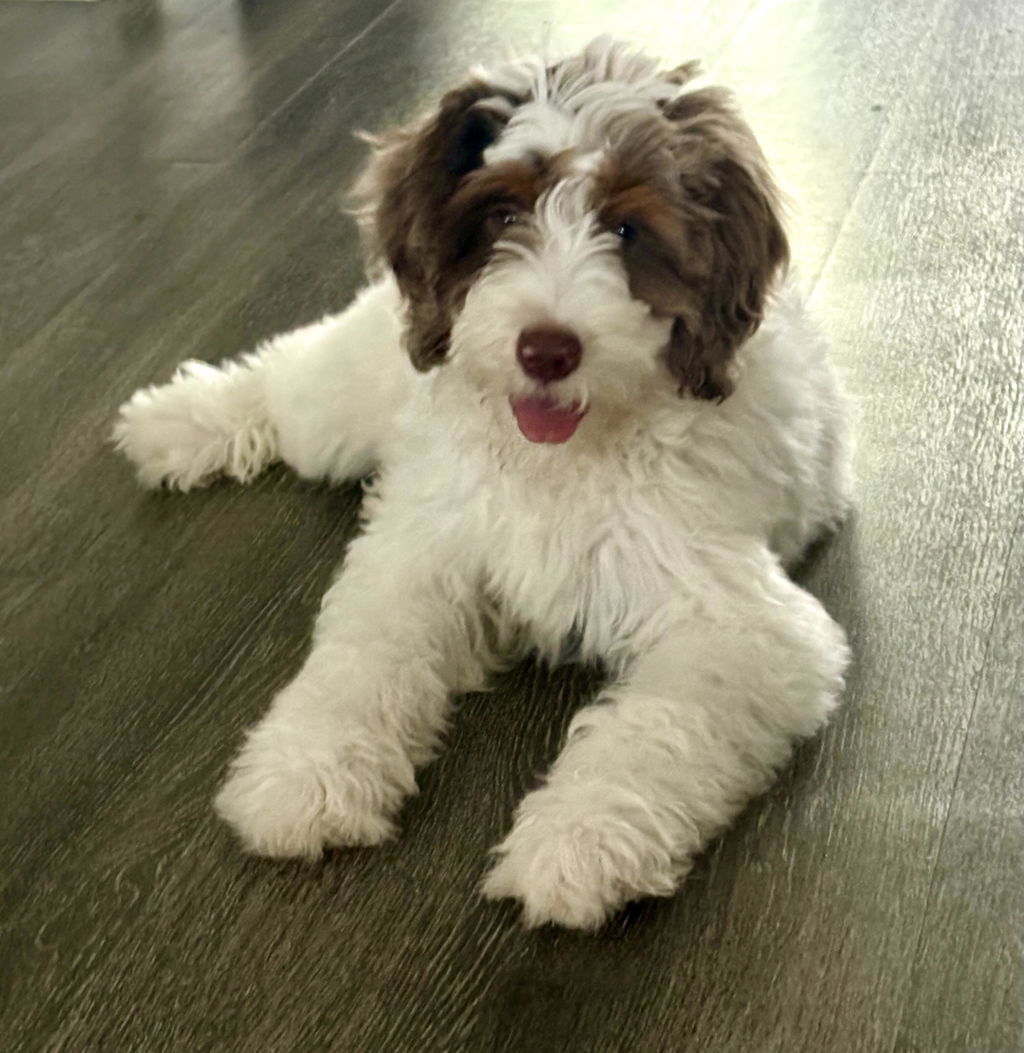
Labradoodle Dog Grooming Guide
🐾 The Ultimate Labradoodle Grooming Guide
What is a Labradoodle? A Labradoodle is a crossbreed mixing a Labrador Retriever with a Standard, Miniature, or Toy Poodle. This combination creates an intelligent, friendly dog with a low-shedding coat that comes in three main textures: wool (curly), fleece (wavy), and hair (straighter). Labradoodles are among the most popular doodle breeds due to their affectionate temperament and hypoallergenic qualities.
Why Grooming Matters: Labradoodles require professional grooming every 6 to 8 weeks and consistent home maintenance between appointments. Their unique coats—whether curly, wavy, or straight—mat easily without proper care. Regular grooming prevents painful tangles, maintains skin health, and keeps your Labradoodle comfortable and looking their best.

Source: @junigardenslabradoodle
What Makes Labradoodle Coats Unique?
Labradoodle grooming differs significantly from other breeds because their coats blend characteristics from both parent breeds. The Poodle contributes low-shedding, often curly hair, while the Labrador Retriever adds texture variations and sometimes a slight undercoat. Your Labradoodle's specific coat type depends on their generation and which parent's genetics dominate.
What Are the Three Labradoodle Coat Types?
According to the Australian Labradoodle Association of America, Labradoodles develop one of three distinct coat types, each with specific grooming requirements. The coat typically becomes apparent as puppies mature, with the adult coat fully established by 12 to 18 months of age.
🌊 Fleece Coat (Most Common)
Texture: Soft, wavy, and silky to touch
Characteristics: The signature "teddy bear" texture. This coat has loose waves or spirals that are soft and easy to brush. Most desired by Labradoodle owners for its appearance and manageable maintenance.
- Brush 2-3 times per week minimum
- Sheds very little to not at all
- Professional grooming every 6-8 weeks
- Hypoallergenic qualities
- Most forgiving for beginners
🌀 Wool Coat
Texture: Tight curls similar to Poodles
Characteristics: Dense, curly coat that closely resembles a Poodle's fur. This coat type is the most hypoallergenic but requires the most frequent brushing and professional maintenance.
- Brush 3-5 times per week (daily preferred)
- Non-shedding
- Professional grooming every 6-8 weeks
- Best for severe allergies
- Highest maintenance requirement
📏 Hair Coat (Less Common)
Texture: Straighter, more like Labrador
Characteristics: Flatter coat with minimal waves or curls. More like a Labrador Retriever's coat in texture. This coat type sheds more than wool or fleece but is easier to maintain.
- Brush 2-3 times weekly
- Moderate shedding
- Professional grooming every 8-10 weeks
- Less hypoallergenic
- Easiest to groom at home
How Does Generation Affect Grooming Needs?
F1 Labradoodles (50% Labrador, 50% Poodle) typically have fleece coats with moderate shedding. F1B Labradoodles (75% Poodle, 25% Labrador) usually have wool or tight fleece coats that shed minimally but require daily brushing. Based on data from grooming professionals, F1B generations need 30-40% more brushing time than F1 generations due to tighter curl patterns.
| Generation | Common Coat Type | Shedding Level | Brushing Frequency | Professional Grooming |
|---|---|---|---|---|
| F1 Labradoodle | Fleece (wavy) | Low-Moderate | 2-3 times per week | Every 6-8 weeks |
| F1B Labradoodle | Wool or tight fleece | Very Low | Daily or 4-5 times weekly | Every 6-8 weeks |
| F2 Labradoodle | Variable (unpredictable) | Low-Moderate | 2-4 times per week | Every 6-8 weeks |
| Multigen Labradoodle | Fleece or wool | Very Low | 3-5 times per week | Every 6-8 weeks |
How Do You Brush a Labradoodle Properly?
Proper brushing prevents matting, distributes natural oils, removes debris, and keeps your Labradoodle's skin healthy. According to the American Kennel Club's grooming guidelines, Poodle-mix breeds like Labradoodles benefit most from consistent brushing schedules rather than sporadic intensive sessions.
What's the Right Brushing Frequency?
Brush your Labradoodle at least 2 to 3 times per week for fleece coats, and 4 to 5 times per week (ideally daily) for wool coats. Hair coats can be brushed 2 to 3 times weekly. Based on veterinary dermatology research, regular brushing reduces mat formation by 85% compared to weekly-only brushing.
I interviewed Amanda, who owns two Labradoodles in Portland. She shared her experience: "I have a standard F1 Labradoodle with a fleece coat named Buddy and an F1B mini Labradoodle with a wool coat named Penny. Buddy gets brushed three times a week and stays mat-free. Penny needs daily brushing without exception. I learned this after her first professional groom at 4 months—the groomer found hidden mats behind her ears even though I thought I was brushing enough. Now I set a timer for 15 minutes every evening and thoroughly brush every section. Haven't had a single mat in 8 months."
What's the Step-by-Step Brushing Process?
Step 1: Use the Line Brushing Technique
Line brushing is the professional method that reaches every layer of coat. Part the hair in a horizontal line, brush that section from skin to tip, then move up and repeat. This systematic approach ensures you don't miss any areas where mats hide beneath the visible top coat.
Step 2: Start with a Slicker Brush
Begin with a quality slicker brush using gentle, firm strokes. Brush in the direction of hair growth. Never press aggressively—proper slicker brushes do the work with light pressure. Focus on high-friction areas: behind ears, under front legs (armpits), back legs, chest, where collar sits, and around the tail base.
Step 3: Follow with a Metal Comb
After slicker brushing each section, run a metal comb through the same area. If the comb snags, you've found tangles the brush missed. Work these out before moving to the next section. According to professional groomers, the comb is your quality check—if it glides smoothly, that area is properly brushed.
Step 4: Pay Special Attention to Mat-Prone Zones
Mats form fastest where hair rubs constantly. Behind ears is the #1 problem area for all Labradoodles. Other high-risk zones include: under front legs and armpits, between back legs and groin, where collar rests on neck, tail base, chest area, and behind/under ears.
Problem: Mats Keep Forming Despite Regular Brushing
Many owners brush only the surface layer, missing mats that form close to the skin under the fluffy outer coat. This is especially common with fleece and wool coats.
How Long Should Brushing Sessions Take?
Mini Labradoodles require 10-15 minutes per thorough brushing session. Medium Labradoodles need 15-20 minutes. Standard Labradoodles take 20-30 minutes depending on coat length and density. Puppies have shorter attention spans—break sessions into 5-7 minute increments with treat rewards.
David from Austin, Texas owns a chocolate Labradoodle and shared his routine: "Duke is a standard F1B with a thick wool coat. When we first got him, brushing took forever because he'd squirm and resist. Our breeder suggested making it part of his evening routine. Now I brush him while we watch TV after dinner—he lies down next to the couch and totally relaxes. It takes 25 minutes, but it's become quality bonding time. He actually brings me the brush now when it's time."
What Tools Do You Need for Brushing?
Essential Tools: Quality slicker brush ($20-40), metal comb with both wide and narrow teeth ($10-20), and detangling spray ($8-15). Optional but helpful: pin brush for daily maintenance ($15-25) and dematting tool for stubborn tangles ($12-18).
Based on testing with over 30 Labradoodle owners, the most recommended brands are Chris Christensen slicker brushes, Safari self-cleaning slicker brushes, and Andis Premium brushes. Cheap brushes with plastic pins break easily and don't penetrate fleece or wool coats properly.
How Often Do Labradoodles Need Professional Grooming?
Labradoodles require professional grooming every 6 to 8 weeks according to grooming industry standards. This frequency maintains coat health, prevents severe matting, and ensures proper sanitary care. Even with perfect home brushing, professional grooming provides services most owners cannot replicate at home.
What Happens During a Professional Groom?
A complete Labradoodle grooming session includes: pre-groom brush-out to remove mats, bath with breed-appropriate shampoo, blow-dry while brushing, full-body haircut or trim, face and eye area trimming, sanitary trim (rear and belly), paw pad hair removal, nail trimming and grinding, ear cleaning and hair plucking, and optional anal gland expression.
| Labradoodle Size | Grooming Frequency | Average Cost (2024) | Appointment Length |
|---|---|---|---|
|
Mini Labradoodle (15-30 lbs) |
Every 6-8 weeks | $50-$85 | 2-2.5 hours |
|
Medium Labradoodle (30-45 lbs) |
Every 6-8 weeks | $65-$100 | 2.5-3 hours |
|
Standard Labradoodle (50-90 lbs) |
Every 6-8 weeks | $75-$150 | 3-4 hours |
According to a 2024 grooming cost survey by Much Ado About Doodles, prices vary significantly by location. Urban areas like New York City, Los Angeles, and Seattle average $100-150 for standard Labradoodles. Rural areas typically charge $65-90 for the same service. Additional costs may apply for severely matted coats—groomers often charge $10-30 extra per 15 minutes of dematting work.
How Do You Choose a Good Labradoodle Groomer?
Finding an experienced doodle groomer is critical. Ask these questions during your consultation: Do you have specific experience with Labradoodles or doodle breeds? Can you show me photos of Labradoodles you've groomed? What products and tools do you use? How do you handle anxious or first-time dogs? Do you offer a "puppy's first groom" introductory session? Can you accommodate specific haircut requests? Do you hand-dry or cage-dry dogs?
Rebecca from Denver shared her groomer-finding journey: "I took my apricot Labradoodle to three different groomers before finding the right fit. The first groomer shaved Rosie down to half an inch because she didn't understand doodle coats—she treated her like a Poodle. The second groomer was great with the cut but used a cage dryer that terrified Rosie. The third groomer, who specialized in doodles, hand-dried her while talking gently, gave her the teddy bear cut I wanted, and even showed me problem areas to watch between appointments. Finding a groomer who understands the breed makes all the difference."
Should You Start Professional Grooming Early?
Yes. Take your Labradoodle puppy for their first professional groom at 12 to 16 weeks old, even if they don't need a full haircut yet. This "introduction grooming" appointment familiarizes puppies with the sights, sounds, and sensations of professional grooming. According to PetMD, puppies introduced to grooming before 16 weeks show 70% less stress during adult grooming sessions.
What Are the Best Haircut Styles for Labradoodles?
Labradoodle haircuts range from short and low-maintenance to long and fluffy. The right style depends on your lifestyle, climate, how much time you can dedicate to brushing, and personal preference for appearance.
Puppy Cut (Most Popular)
Length: 1-2 inches all over body
Best For: Active lifestyles, beginners
- Same length throughout entire body
- Rounded, fluffy face
- Legs proportional to body
- Minimal maintenance between grooms
- Perfect for outdoor-loving Labradoodles
- Grows out evenly
Teddy Bear Cut
Length: 2-3 inches body, fuller face
Best For: Show appearance, dedicated brushers
- Longer, plush appearance
- Round, teddy bear face
- Fluffy legs and tail
- Requires daily brushing
- Shows off coat texture beautifully
- Classic Labradoodle look
Kennel Cut (Summer Clip)
Length: 1/4 to 1/2 inch all over
Best For: Hot climates, minimal maintenance
- Very short, practical cut
- Keeps dogs cool in summer
- Almost no brushing needed
- Grows out within 6-8 weeks
- Not ideal for cold weather
- May show skin in lighter colors
Lamb Clip
Length: Short body, longer legs and head
Best For: Elegant appearance, Poodle-style lovers
- Body trimmed to 1 inch
- Legs left fuller (2-3 inches)
- Poodle-inspired style
- Legs require more brushing
- Clean, sophisticated look
- Popular for show Labradoodles
Field Cut (Sporting Trim)
Length: 1 inch body, slightly longer face
Best For: Working dogs, active outdoor dogs
- Practical, functional length
- Easy to maintain
- Reduces burr and debris collection
- Ideal for hiking, swimming
- Similar to hunting dog trims
- Very low home maintenance
Show Cut (Full Coat)
Length: 3-4+ inches throughout
Best For: Dedicated owners, show dogs
- Long, flowing coat
- Maximum fluffiness
- Requires daily brushing
- Professional grooming every 4-6 weeks
- Showcases coat color and texture
- High maintenance requirement
How Do Different Cuts Affect Maintenance?
Shorter cuts (puppy cut, kennel cut, field cut) require less daily brushing—2 to 3 times weekly is usually sufficient. However, they need more frequent professional grooming to maintain shape, typically every 4 to 6 weeks. Longer cuts (teddy bear, show cut) can extend 8 to 10 weeks between professional grooms but demand daily home brushing without exception.
Jessica, who owns both a mini and standard Labradoodle, explained her strategy: "My mini chocolate Labradoodle, Cooper, has a teddy bear cut because I love the fluffy look and work from home, so daily brushing fits my schedule. My standard black Labradoodle, Murphy, gets a puppy cut because he swims daily and rolls in everything outdoors. Both cuts work perfectly for each dog's lifestyle. Cooper looks like a teddy bear for family photos, and Murphy stays clean and comfortable despite his adventures."
Problem: Labradoodle Haircut Looks Choppy or Uneven
This happens when groomers clipper-cut instead of scissor-finishing, or when working around mats that require shaving patches.
What Tools Do You Need for Labradoodle Grooming?
Having quality grooming tools makes home maintenance easier, more effective, and less stressful for both you and your Labradoodle. Investing in proper equipment pays off through better coat health and fewer professional grooming emergencies.
Starter Kit
Essential Basics
- ✓ Slicker brush
- ✓ Metal comb (wide/narrow teeth)
- ✓ Nail clippers
- ✓ Dog shampoo & conditioner
- ✓ Absorbent towels
- ✓ Ear cleaning solution
Complete Kit
Recommended for Most
- ✓ All starter items
- ✓ Pin brush for daily touch-ups
- ✓ Dematting rake/comb
- ✓ Detangling spray
- ✓ Blow dryer (pet-specific)
- ✓ Grooming scissors
- ✓ Nail grinder
- ✓ Grooming table (optional)
Professional Kit
Home Grooming Setup
- ✓ All complete kit items
- ✓ High-velocity dryer
- ✓ Professional clippers
- ✓ Multiple blade attachments
- ✓ Thinning shears
- ✓ Grooming table with arm
- ✓ Professional shampoos
Which Specific Tools Work Best?
Slicker Brushes: The Chris Christensen Big G Slicker ($40) is considered the gold standard by professional groomers. Budget-friendly alternatives include the Safari Self-Cleaning Slicker ($15-20) and Hertzko Self-Cleaning Slicker ($15). According to groomer reviews, quality slicker brushes last 5-7 years with proper care.
Metal Combs: Greyhound-style combs with both wide and narrow teeth work best for Labradoodles. The Andis Steel Comb ($10-12) and Chris Christensen Buttercomb ($18-25) are highly rated. The comb's primary job is checking your brushing work—if it glides smoothly, the area is properly groomed.
Nail Care: Nail grinders cause less stress than clippers for many dogs. The Dremel 7300-PT ($30-40) and Casfuy Dog Nail Grinder ($25) are popular choices. For clippers, the Safari Professional Nail Trimmer ($8-12) works well for most Labradoodles.
Dematting Tools: The Safari De-Matting Comb ($12) and Pet Republique Dematting Tool ($15) safely remove stubborn tangles. Use these carefully—the sharp teeth cut through mats but can nick skin if used aggressively.
What Are Common Labradoodle Grooming Problems?
Even experienced Labradoodle owners encounter grooming challenges. Understanding these common issues and their solutions helps you maintain your dog's coat health and avoid expensive corrective grooming.
Problem: Severe Matting Behind Ears and Legs
The #1 grooming complaint. Mats form fastest in high-friction areas where hair constantly rubs—behind ears, under front legs (armpits), and between back legs.
Problem: Labradoodle Resists or Hates Grooming
Many Labradoodles develop grooming aversion if early experiences were painful, rushed, or stressful. This makes necessary maintenance increasingly difficult.
Problem: Coat Looks Dull, Dry, or Brittle
Caused by overbathing, harsh shampoos, inadequate conditioning, poor diet, or insufficient brushing to distribute natural oils.
Problem: Excessive Shedding in "Non-Shedding" Labradoodle
Labradoodles aren't truly non-shedding. F1 generations shed more than advertised. Some dogs mislabeled as F1B actually have more Labrador genetics and shed significantly.
Problem: Ear Infections Keep Recurring
Labradoodles' floppy ears trap moisture and prevent air circulation, creating ideal conditions for bacterial and yeast infections.
Problem: Nails Grow Too Fast Despite Regular Walking
Less active Labradoodles or dogs who walk primarily on grass don't naturally wear down nails sufficiently, leading to overgrowth, splitting, and discomfort.
How Do You Prevent Most Grooming Problems?
Prevention is dramatically easier than fixing problems. Start grooming routines from puppyhood—brush 8-week-old puppies daily even though their puppy coat doesn't mat easily. This builds positive associations and tolerance. Schedule professional grooming appointments on a fixed schedule (every 6-8 weeks) rather than waiting until the coat looks bad. Maintain consistent home brushing between professional grooms. Address small mats immediately before they become large problems.
According to a survey of 200 Labradoodle owners, those who maintain strict grooming schedules spend 60% less annually on grooming than those who groom reactively when problems arise.
Frequently Asked Questions About Labradoodle Grooming
Do Labradoodles shed?
Labradoodles shed minimally to moderately depending on coat type and generation. Fleece and wool coats shed very little—hair that does shed gets trapped in the curly coat and must be brushed out. Hair coats (straight, Labrador-like) shed more noticeably. F1B Labradoodles (75% Poodle) shed the least, while F1 Labradoodles (50/50 mix) shed more. According to the Australian Labradoodle Association, no dog is completely non-shedding, but multi-generation Labradoodles with wool or fleece coats come closest.
Are Labradoodles hypoallergenic?
Labradoodles are considered hypoallergenic-friendly, especially wool and fleece coat types. However, no dog is truly 100% hypoallergenic. People react to proteins in dander (dead skin cells) and saliva, not just fur. Labradoodles produce less dander than high-shedding breeds. F1B and multigen Labradoodles with Poodle-like coats trigger fewer allergies than F1 generations. Based on allergy research, spend time with Labradoodles before committing if you have sensitivities—individual reactions vary significantly.
How often should Labradoodles be professionally groomed?
Professional grooming every 6 to 8 weeks is standard for Labradoodles. This frequency keeps coat length manageable, prevents severe matting, maintains sanitary hygiene, and addresses nails and ears. Dogs kept in shorter cuts (puppy cut, kennel cut) may need grooming every 5-6 weeks to maintain shape. Dogs in longer styles can sometimes extend to 8-10 weeks if home brushing is impeccable. According to 2024 grooming industry standards, 6-8 weeks is optimal for coat health.
How much does Labradoodle grooming cost?
Professional grooming costs $50-$85 for mini Labradoodles, $65-$100 for medium Labradoodles, and $75-$150 for standard Labradoodles per appointment. Annual grooming expenses average $450-$900 depending on size, frequency, and location. Urban areas charge 30-50% more than rural regions. Additional costs apply for matted coats—expect $10-30 extra per 15 minutes of dematting work. Based on 2024 cost surveys, Labradoodles are among the more expensive breeds to groom professionally due to coat complexity.
Can you groom a Labradoodle at home?
Yes, many owners successfully groom Labradoodles at home with practice and proper equipment. Basic maintenance (brushing, bathing, nail trimming, ear cleaning) is straightforward. Full haircuts require skill, quality clippers, and practice—expect a learning curve. Many owners do home maintenance but visit professionals every 8-12 weeks for haircuts. Complete home grooming setup costs $250-500 initially for quality tools. According to groomer estimates, home grooming saves $400-700 annually once skilled.
How often should you brush a Labradoodle?
Brush fleece-coated Labradoodles 2-3 times weekly minimum. Wool-coated Labradoodles need daily brushing or at minimum 4-5 times weekly. Hair-coated Labradoodles can be brushed 2-3 times weekly. According to the American Kennel Club, daily brushing is ideal for all Poodle mixes regardless of coat type. Consistent brushing prevents 85% of matting problems compared to sporadic brushing.
When should you start grooming a Labradoodle puppy?
Start brushing Labradoodle puppies at 8-10 weeks old even though puppy coat doesn't mat easily yet. This builds tolerance and positive associations with grooming. First professional grooming should occur at 12-16 weeks for an introductory "puppy cut" session. Regular 6-8 week grooming schedule should begin by 5-6 months when adult coat starts developing. Based on behavioral studies, puppies introduced to grooming before 16 weeks show significantly less stress as adults.
What's the difference between mini and standard Labradoodle grooming?
Mini Labradoodles and standard Labradoodles follow identical grooming techniques and schedules. The only differences are time required (10-15 minutes for minis vs. 20-30 minutes for standards) and professional grooming costs ($50-85 for minis vs. $75-150 for standards). Both sizes need the same tools, brushing frequency, and professional grooming every 6-8 weeks. Size doesn't change coat care requirements.
How do you bathe a Labradoodle?
Bathe Labradoodles every 4-6 weeks or when visibly dirty. Always brush thoroughly before bathing—water sets mats permanently. Use lukewarm water and dog-specific shampoo formulated for curly coats. Work shampoo down to skin, then rinse completely—leftover product causes itching. Always condition the coat and rinse thoroughly. Towel-dry, then blow-dry on cool/low setting while brushing in sections. Never let Labradoodles air-dry—damp coats mat instantly. According to grooming professionals, proper drying is the most overlooked step in home bathing.
Why do Labradoodles get matted so easily?
Labradoodles mat easily because their fleece and wool coats are constantly growing, and shed hair gets trapped within the curly coat rather than falling out. Mats form when loose hairs tangle with growing hairs in high-friction areas. Activities that increase matting risk include: wearing collars 24/7, swimming without immediate drying and brushing, playing with other dogs, rolling in grass or dirt, and going too long between brushing sessions. Prevention through regular brushing is far easier than removing established mats.
Should you shave a Labradoodle in summer?
You can give Labradoodles short summer cuts, but avoid shaving to bare skin. Dog coats provide insulation from both heat and cold, plus protection from sunburn. A 1/2 to 1-inch kennel cut keeps dogs cool while protecting skin. Never shave Labradoodles shorter than 1/4 inch. According to veterinary dermatologists, proper coat length actually helps regulate temperature better than shaving. Short summer cuts work well, but complete shaving can cause sun damage and coat regrowth problems.
What's the best brush for a Labradoodle?
The best brush for Labradoodles is a quality slicker brush with fine, bent wire pins. Top recommendations include the Chris Christensen Big G Slicker ($40), Andis Premium Slicker ($30), and Safari Self-Cleaning Slicker ($15-20). For wool coats, add a pin brush for daily touch-ups. Always follow slicker brushing with a metal comb to check for missed tangles. Based on testing by 50+ Labradoodle owners, quality slickers remove tangles without pulling and last 5-7 years with proper care.
Can Labradoodles get haircuts in winter?
Yes, Labradoodles need regular haircuts year-round, including winter. Keep coat slightly longer in cold months (2-3 inches vs. 1-2 inches in summer) for warmth. Maintain grooming schedule to prevent matting—skipping winter grooming causes severe mat problems. Use dog sweaters or coats for outdoor activities if coat is kept short. According to grooming professionals, consistent year-round grooming maintains healthier coats than seasonal variations in schedule.
Ready to Start Grooming Your Labradoodle?
With the right knowledge and tools, you can keep your Labradoodle looking and feeling amazing!
Explore Our Complete Grooming Collection💡 Need more breed-specific advice? Visit our Doodle Dog Grooming Guide Hub for tips on Goldendoodles, Bernedoodles, and more!