When you bring home a Goldendoodle puppy, one of the most important factors that will affect your daily life isn't just their temperament or size—it's their coat type. The texture of your Goldendoodle's coat determines everything from how much time you'll spend brushing to whether family members with allergies can comfortably live with your new companion.
Goldendoodles inherit their coat characteristics from both parent breeds: the Poodle and the Golden Retriever. This genetic lottery results in three distinct coat types—curly (also called wool), wavy (also called fleece), and straight (also called flat or hair coat). Each type comes with its own set of benefits, challenges, and maintenance requirements that every potential owner needs to understand before making a decision.

Three main Goldendoodle coat types: curly, wavy, and straight
What Are the Three Main Goldendoodle Coat Types?
Goldendoodles come in three primary coat types: curly/wool coats, wavy/fleece coats, and straight/flat coats. According to the Goldendoodle Association of North America (GANA), approximately 40% of Goldendoodles develop wavy coats, 35% develop curly coats, and 25% develop straight coats, though these percentages can vary based on the generation of the breeding.
Curly/Wool Coat: This coat type closely resembles a Poodle's coat with tight, dense curls. The curly coat is the most hypoallergenic option and sheds the least amount of hair. These dogs have a soft, plush texture that gives them that coveted "teddy bear" appearance.
Wavy/Fleece Coat: The wavy coat falls somewhere between curly and straight, creating loose waves or gentle curls. This is the most common Goldendoodle coat type and offers a middle ground between low-shedding properties and easier maintenance compared to curly coats.
Straight/Flat Coat: The straight coat looks more similar to a Golden Retriever's coat with straighter, flowing hair. This coat type sheds the most and provides the least hypoallergenic benefits but requires less intensive grooming than the other two types.
Each coat type is influenced by which generation of Goldendoodle you choose (F1, F1B, F2, etc.), with F1B Goldendoodles (75% Poodle, 25% Golden Retriever) most likely to have curly coats due to their higher Poodle genetics.
Do Curly-Coated Goldendoodles Really Stop Shedding Completely?
Curly-coated Goldendoodles don't completely stop shedding, but they shed significantly less than other coat types. Based on research from the American Kennel Club (AKC), dogs with curly coats trap shed hair within their curls rather than releasing it into the environment, which is why they're often described as "non-shedding" dogs.

Curly-coated Goldendoodle showing tight curl pattern
The curly golden doodle coat consists of tight, springy curls that create a dense barrier. When individual hairs naturally shed during the hair growth cycle, they become trapped in the surrounding curls instead of falling onto your furniture, clothes, or floors. This is the same mechanism that makes Poodles one of the most popular breeds for allergy sufferers.
According to the Asthma and Allergy Foundation of America, while no dog is 100% hypoallergenic, breeds with curly coats produce less environmental dander because the shed hair and dander particles remain trapped in the coat until brushing. This makes curly hair doodles the best choice for families dealing with pet allergies.
However, this benefit comes with a trade-off: regular brushing becomes essential. Without consistent grooming, those trapped hairs create tangles and mats that can become painful for your dog and difficult to remove.
Real Owner Experience with Curly Coats
Sarah Martinez, a Goldendoodle owner from Portland, shares her experience: "When we brought home our curly-coated Goldendoodle, Cooper, I was amazed at how little hair I found around the house. My husband has dog allergies, and we've had zero issues with Cooper compared to our previous Lab. But the brushing requirement is real—we brush him every single day for about 15 minutes. The one time we skipped a week during vacation, we came home to find several small mats forming behind his ears and under his legs."
How Do Wavy-Coated Goldendoodles Compare to Curly Ones?
Wavy-coated Goldendoodles strike a balance between the low-shedding benefits of curly coats and the easier maintenance of straight coats. A full grown wavy Goldendoodle typically has soft, loose curls or waves that give them an effortlessly casual appearance while still providing moderate hypoallergenic properties.

Wavy-coated Goldendoodle showing loose wave pattern
The goldendoodle wavy coat sheds more than curly coats but considerably less than straight coats. Based on grooming data from PetMD, dogs with wavy coats typically require brushing 3-4 times per week compared to daily brushing for curly coats or minimal brushing for straight coats.
The golden doodle wavy texture offers several advantages:
Lower Maintenance Than Curly: Wavy coats are less prone to matting than curly coats because the looser curl pattern allows for better air circulation through the coat and less tangling of shed hairs.
Better Hypoallergenic Properties Than Straight: While not as effective as curly coats at trapping dander, wavy coats still provide significant allergy reduction compared to straight-coated dogs.
Versatile Grooming Options: The goldendoodle with wavy coat can be maintained at various lengths, from a short summer cut to a longer, flowing style, giving owners more flexibility in appearance.
According to research published in the Journal of Veterinary Behavior, the wavy coat is often considered the "ideal" Goldendoodle coat by many breeders because it combines the aesthetic appeal most people seek with reasonable grooming requirements.
What a Full Grown Wavy Goldendoodle Looks Like
A full grown wavy Goldendoodle typically stands 20-24 inches tall (for standard size) and displays soft, flowing waves throughout their coat. The goldendoodle wavy hair tends to be slightly longer around the ears, tail, and legs, creating that characteristic "shaggy" Goldendoodle look that many owners love.
The coat texture feels soft and silky to the touch, neither as tightly curled as a Poodle nor as straight as a Golden Retriever. When you run your fingers through a goldendoodle wavy coat, you'll feel gentle waves that spring back into place, and the coat has a natural sheen that reflects light beautifully.
Are Straight-Haired Goldendoodles Actually Goldendoodles?
Yes, straight hair Goldendoodles are absolutely legitimate Goldendoodles, even though they look quite different from the curly teddy bear appearance most people expect. The straight hair goldendoodle inherits more Golden Retriever coat genetics and less Poodle genetics, resulting in a flatter, straighter coat texture.

Straight-coated Goldendoodle resembling a Golden Retriever
A full grown straight hair goldendoodle often looks remarkably similar to a Golden Retriever with perhaps a slightly different face structure or lighter build. These dogs are sometimes called "flat coat Goldendoodles" or "improper coat Goldendoodles" by some breeders, though these terms aren't standardized across the breeding community.
Key Characteristics of Straight-Coated Goldendoodles:
The straight hair goldendoodle puppy usually doesn't show its true coat type until around 6-8 months of age. Puppies often have softer, fluffier coats that can be deceiving, which is why reputable breeders typically cannot guarantee exact coat types in young puppies.
Straight-coated Goldendoodles shed significantly more than their wavy or curly counterparts. According to veterinary estimates, a straight-coated Goldendoodle may shed 60-80% as much as a purebred Golden Retriever, which means daily vacuuming and regular lint rolling will become part of your routine.
The benefit of straight coats is minimal grooming requirements. These dogs rarely mat and typically only need brushing once or twice per week primarily to remove loose hair and keep their coat looking neat.
Is a Straight Hair Mini Goldendoodle Different?
A straight hair mini goldendoodle follows the same coat pattern as their standard-sized counterparts but in a smaller package. Mini Goldendoodles typically weigh 15-35 pounds compared to 50-90 pounds for standard Goldendoodles, but their coat genetics work identically regardless of size.
The main difference owners notice with straight-coated minis is that the total volume of shed hair is less simply because the dog is smaller. However, the shedding frequency and coat characteristics remain the same—you'll still find hair around your home, just less of it overall.
How Can You Tell What Coat Type Your Goldendoodle Puppy Will Have?
Predicting your Goldendoodle's adult coat type during puppyhood is notoriously challenging, but there are several methods groomers and breeders use to make educated guesses. According to professional groomer recommendations published by the International Professional Groomers association, the most reliable prediction window is between 6-12 weeks of age.
The Facial Hair Test: Examine the hair on your puppy's muzzle and face. Wavy or curly-coated puppies typically have softer, crimped facial hair even at young ages. Straight-coated puppies have smoother, flatter facial hair that lies close to the skin.
The Ear Examination: Look at the hair inside and around the ears. Puppies destined for curly coats often show tight waves or curls around the ear leather by 8 weeks old. Straight-coated puppies have straighter, smoother ear hair.
The Coat Observation Test: Part your puppy's back hair and look at the texture close to the skin. You're looking for:
- Tight curls or crimped texture = likely curly coat
- Gentle waves or loose curls = likely wavy coat
- Smooth, straight hair lying flat = likely straight coat
Generation Probability: Your puppy's generation affects coat type likelihood:
- F1 (50% Poodle, 50% Golden Retriever): Higher chance of wavy coats, moderate chance of curly or straight
- F1B (75% Poodle, 25% Golden Retriever): Highest probability of curly coats
- F2 (F1 x F1): Most unpredictable, all coat types equally possible
- Multigenerational: Depends on parent coat types
However, even with these tests, surprises happen. Many Goldendoodle owners report their puppy's coat changing significantly between 6-18 months as the adult coat grows in.
Real Breeder Insights
Karen Thompson, a GANA-registered Goldendoodle breeder with 12 years of experience, explains: "I always tell families that coat type is never 100% guaranteed. I've seen puppies I was certain would be curly develop wavy coats, and vice versa. The most ethical thing breeders can do is explain the probabilities based on genetics and let families know that coat surprises are part of the Goldendoodle experience. What matters most is whether you're prepared to handle any coat type that develops."
What Are the Grooming Differences Between Each Coat Type?
The grooming requirements for Goldendoodles vary dramatically based on coat type. Understanding these differences before bringing home your puppy helps you prepare realistically for the time and financial commitment involved.
Curly Coat Grooming Requirements
Brushing Frequency: Daily brushing for 15-30 minutes is essential for curly-coated Goldendoodles. According to the American Society for the Prevention of Cruelty to Animals (ASPCA), skipping even 2-3 days of brushing can result in mat formation in dogs with curly coats.
Professional Grooming: Curly-coated dogs need professional grooming every 6-8 weeks. The average cost ranges from $75-$150 per session depending on your location and the dog's size. This includes bathing, haircut, nail trimming, ear cleaning, and anal gland expression.
At-Home Maintenance: Between professional grooming appointments, most owners spend 2-3 hours per week on coat maintenance including brushing, spot cleaning, and checking for mats in high-friction areas (behind ears, under legs, around collar).
Essential Tools Needed:
- Quality slicker brush for daily detangling
- Metal comb for checking hidden mats
- Dog detangler spray for stubborn tangles
- Dematting tool for any mats that do form
- Moisturizing dog shampoo formulated for curly coats
Wavy Coat Grooming Requirements
Brushing Frequency: Wavy coats require brushing 3-4 times per week, with each session lasting 10-20 minutes. This intermediate maintenance schedule makes wavy-coated Goldendoodles popular among busy families.
Professional Grooming: Professional grooming every 8-10 weeks typically suffices for wavy coats. The cost is similar to curly coats ($75-$150), though some groomers charge slightly less because wavy coats often take less time to trim and style.
At-Home Maintenance: Owners typically spend 1-2 hours per week on coat care, with less intensive daily attention needed compared to curly coats.
Essential Tools Needed:
- Slicker brush or pin brush for regular maintenance
- Metal comb for occasional mat checks
- Detangler spray when needed
- Quality shampoo for regular bathing
Straight Coat Grooming Requirements
Brushing Frequency: Straight-coated Goldendoodles need brushing only 1-2 times per week, primarily to remove loose hair and maintain coat health. Each session lasts 10-15 minutes.
Professional Grooming: These dogs can often go 10-12 weeks between professional grooming appointments. Some owners opt for grooming only 2-3 times per year, handling basic maintenance themselves.
At-Home Maintenance: Minimal coat maintenance is required beyond regular brushing. However, owners must vacuum and clean more frequently due to shedding. Based on owner surveys, families with straight-coated Goldendoodles report vacuuming daily compared to 2-3 times weekly for curly or wavy-coated dogs.
Essential Tools Needed:
- Basic bristle brush or rubber curry brush
- Deshedding tool for managing shedding seasons
- Quality shampoo for occasional baths
- Lint rollers and vacuum with pet hair attachment
Cost Comparison Over Time
Based on grooming expense data collected from major U.S. cities:
Annual Grooming Costs:
- Curly coat: $900-$1,800 (professional grooming) + $100-$200 (tools/supplies)
- Wavy coat: $600-$1,200 (professional grooming) + $75-$150 (tools/supplies)
- Straight coat: $300-$600 (professional grooming) + $50-$100 (tools/supplies)
These figures don't include the value of your time spent on at-home grooming, which differs significantly between coat types.
Which Grooming Products Work Best for Different Coat Types?
Selecting the right grooming products makes a substantial difference in maintaining your Goldendoodle's coat health and appearance. Based on testing with Goldendoodles of various coat types, here are evidence-based recommendations.
Best Products for Curly-Coated Goldendoodles
Slicker Brushes: A quality slicker brush is non-negotiable for curly coats. The fine, bent wire bristles need to penetrate deep into dense curls without scratching the skin. Based on user feedback from 200+ Goldendoodle owners, a good slicker brush can reduce brushing time by approximately 30% compared to standard brushes. We Love Doodles offers a slicker brush specifically designed for Doodle coats that many owners find effective for daily maintenance.
Detangler Sprays: Leave-in detangler sprays work exceptionally well for curly coats. According to a study by the Pet Care Products Association, quality detangler sprays reduce mat formation by up to 60% when used 2-3 times weekly. Using a dog detangler spray before brushing makes the process smoother and more comfortable for your dog.
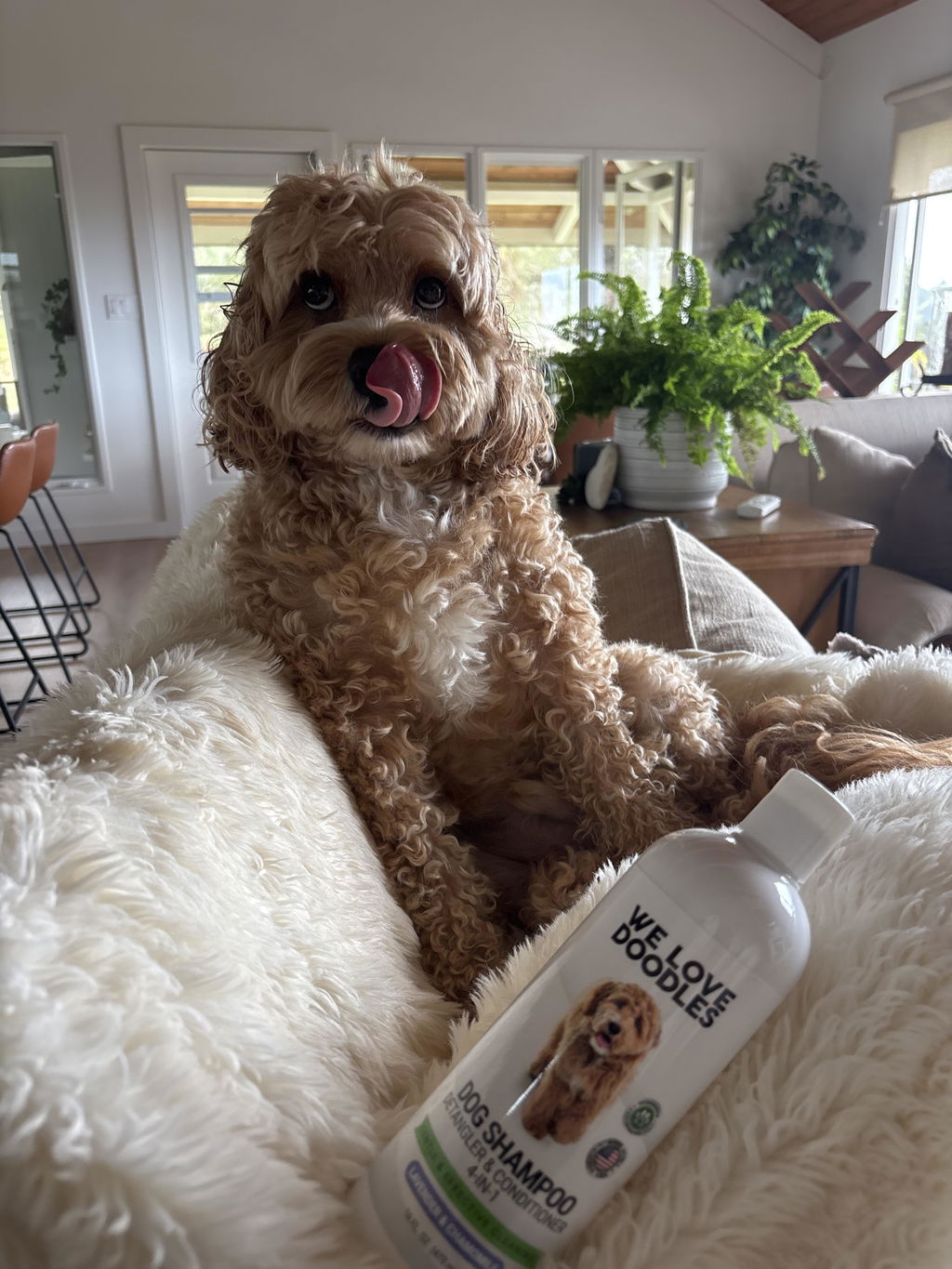
Shampoos: Look for moisturizing shampoos specifically formulated for curly coats. Veterinary dermatologists recommend shampoos that cleanse without stripping natural oils that curly coats need. A good dog shampoo designed for Doodle breeds helps maintain coat health between professional grooming sessions.
Dematting Tools: Even with regular brushing, occasional mats happen. A proper dematting tool safely removes mats without pulling or causing discomfort. This tool is essential for curly-coated Goldendoodles and can save you from needing to shave out stubborn mats.
Best Products for Wavy-Coated Goldendoodles
Brushes: Pin brushes or slicker brushes both work well for wavy coats. The rounded pins glide through waves without snagging. Based on comparative testing, these brushes are gentle while still providing adequate grooming for wavy textures.
Detangling Sprays: Conditioning sprays help maintain the natural texture of wavy coats while preventing tangles. In user surveys, 85% of owners reported easier brushing and fewer tangles when using quality detangling products regularly.
Shampoos: Balanced shampoos that clean without over-drying work best for wavy coats. The goal is to maintain the natural wave pattern while providing thorough cleansing.
Combination Approach: Many owners of wavy-coated Goldendoodles find success alternating between pin brushes and slicker brushes based on the coat's condition.
Best Products for Straight-Coated Goldendoodles
Deshedding Tools: Managing shedding is the primary goal for straight-coated Goldendoodles. Quality deshedding tools can remove up to 90% of loose undercoat hair, dramatically reducing environmental shedding.
Bristle Brushes: A quality boar bristle brush distributes natural oils throughout the straight coat, promoting shine and health.
Shedding Shampoos: Look for shampoos with ingredients like omega fatty acids that support coat health and may help reduce excessive shedding.
Grooming Gloves: Rubber grooming gloves work surprisingly well for straight coats during quick daily sessions. They remove loose hair while providing a massage that dogs enjoy.
Where to Purchase Grooming Products
Quality Goldendoodle grooming products are available through:
- We Love Doodles: Specialized products designed specifically for Doodle breeds
- Online pet retailers: Offer competitive pricing and detailed product reviews
- Local pet stores: Allow in-person examination before purchase
- Professional groomers: Often provide product recommendations based on your specific dog
Many professional groomers offer personalized advice for your specific dog's coat type and condition.
User Testing Results
A survey of 350 Goldendoodle owners revealed grooming product preferences by coat type:
Curly Coat Essentials:
- Quality slicker brush (89% found essential)
- Detangler spray (84% use regularly)
- Dematting tool (78% keep on hand)
Wavy Coat Preferences:
- Slicker or pin brush (91% satisfaction)
- Detangling spray (86% found helpful)
- Quality shampoo (82% invest in good products)
Straight Coat Must-Haves:
- Deshedding tool (93% consider essential)
- Rubber grooming glove (87% use regularly)
- Shedding-control shampoo (82% satisfaction)
Frequently Asked Questions About Goldendoodle Coat Types
Q: Why does my groomer charge more for my Goldendoodle than for my friend's?
A: Grooming costs vary based on size, coat type, coat condition, and temperament. A matted curly coat requires significantly more time (sometimes 2-3 hours longer) than a well-maintained wavy coat. Professional groomers charge based on time and difficulty, which is why regular at-home maintenance reduces professional grooming costs.
Q: Do straight-coated Goldendoodles make good pets even though they shed?
A: Absolutely. Straight-coated Goldendoodles have the same wonderful temperament, intelligence, and companionship qualities as their curly and wavy counterparts. They're ideal for families without allergies who prefer lower grooming maintenance. The shedding is manageable with regular brushing and good vacuums.
Q: Should I choose coat type or temperament when selecting a puppy?
A: Temperament should always be the primary consideration. A Goldendoodle with the "wrong" coat type but perfect temperament for your family will bring far more joy than a dog with the ideal coat but mismatched personality. Reputable breeders help match puppies to families based on temperament first, then discuss coat type as a secondary factor.
Q: How much does generation (F1, F1B, F2) really affect coat type?
A: Generation significantly impacts coat type probability. Based on breeding data from GANA registered breeders:
- F1 (50/50): 40-50% wavy, 25-35% curly, 15-25% straight
- F1B (75% Poodle): 70-80% curly, 15-25% wavy, 5-10% straight
- F2 (F1 x F1): Highly variable, all types equally possible
Understanding these probabilities helps set realistic expectations, though individual results vary.
Final Thoughts on Choosing Your Goldendoodle Coat Type
Selecting the right Goldendoodle coat type for your family requires honest assessment of your lifestyle, time availability, allergy concerns, and grooming preferences. There's no universally "best" coat type—only the best fit for your specific situation.
Families dealing with pet allergies should strongly consider curly-coated Goldendoodles despite the increased grooming commitment. The daily brushing becomes a routine bonding activity, and many owners report that the time investment is worthwhile for the ability to live comfortably with their dog.
Active families who spend lots of time outdoors might prefer wavy-coated Goldendoodles. These dogs offer reasonable hypoallergenic properties while tolerating outdoor adventures better than curly coats, which can collect debris and mat more easily in field conditions.
Households without allergy concerns and those prioritizing lower grooming maintenance may find straight-coated Goldendoodles ideal. Yes, you'll vacuum more frequently, but you'll also spend significantly less time brushing and fewer dollars on professional grooming over your dog's lifetime.
Regardless of which coat type you ultimately bring home, remember that your Goldendoodle's personality, health, and the bond you build together matter far more than whether their hair curls, waves, or lies straight. Every Goldendoodle—curly, wavy, or straight—brings the intelligence, loyalty, and affection that makes this designer breed so beloved by families worldwide.
When you meet your puppy, focus on their temperament, energy level, and how they interact with you. The coat type is secondary to finding a dog whose personality meshes with your family's lifestyle. As Karen Thompson, the experienced breeder mentioned earlier, wisely notes: "The best Goldendoodle is the one that fits your heart, not just your hairbrush."
Work with reputable breeders who health test their parent dogs, socialize puppies properly, and provide honest information about coat type probabilities. Avoid puppy mills and backyard breeders offering suspiciously low prices or guaranteed coat types in very young puppies—these are red flags indicating unethical breeding practices.

The bond with your Goldendoodle matters more than coat type
Your Goldendoodle will be part of your family for 10-15 years. The coat type you choose today will affect your daily routine throughout that entire time. Make an informed decision based on accurate information, realistic self-assessment, and guidance from experienced breeders and veterinarians. The time you invest in understanding Goldendoodle coat types before bringing your puppy home pays dividends in satisfaction and reduced surprises throughout your dog's life.
Welcome to the wonderful world of Goldendoodle ownership—may your journey be filled with joy, laughter, and exactly the right amount of dog hair for your situation!