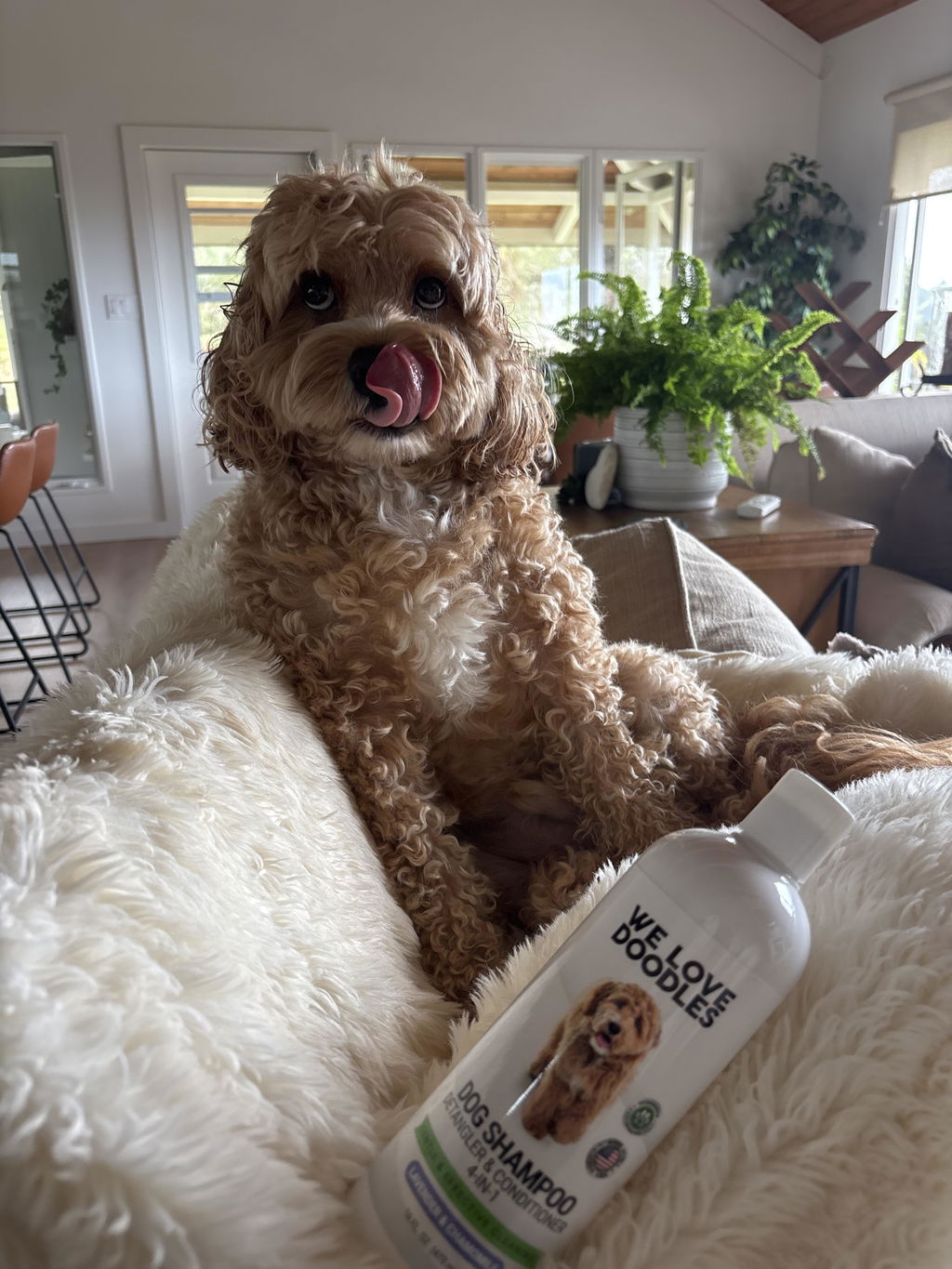
If you’ve ever walked around your home and felt like you’re living in tumbleweed season, you’re not alone. Many dog owners ask: Why does my dog shed so much? Shedding is a natural process but when fur seems to take over your floors, furniture, and clothes, it’s worth digging into why, and what you can do about it.
In this post, we’ll explore the causes of excessive shedding, how to reduce it, how to deal with matted fur on dogs, grooming tips for detangling hair, especially for curly or dense coats, and home grooming routines you can start today.
By the end you’ll have a clearer idea of what to check (health, diet, grooming), and practical steps you can take at home… including brushing routines. In a later post (Problem-Aware stage) we’ll look at effective solutions and you can already see how a Slicker Brush for Dogs Small can fit into that plan (check it out internally here). You’ll also want to link back to our Doodle Grooming Guide HUB for related articles.
What is “normal” dog shedding and how much is too much?
Before we jump into fixes, it helps to understand what counts as normal shedding vs when you should be concerned.
- According to PetMD, shedding is part of your dog’s natural coat cycle. But when your dog sheds more than usual — with dull coat, skin irritation or clumping fur — it could point to an underlying issue.
- The American Kennel Club (AKC) notes that “the most effective method to combat shedding is to remove dead hair with regular brushing, combing, and the use of shedding-controlling shampoos and baths.”
-
Seasonal shedding is common: many breeds “blow coat” in spring and fall. (Wikipedia)
Signs that shedding may be excessive:
-
You’re vacuuming up fur by the handful every day, more than your dog’s “usual” pattern
-
You notice bald patches, lumps of fur coming off in clumps
-
Skin underneath looks red, itchy, flaky, or irritated
-
Your dog acts uncomfortable (scratching, licking)
-
Shedding is sudden or has increased dramatically without a seasonal explanation
If you suspect something more than just “lots of fur,” consult your vet. But in many cases, grooming and home care can dramatically reduce the mess.
Why Is My Dog Shedding So Much?
There’s rarely one cause. Often it’s a mix of breed / coat, diet / health / allergies, environment / stress, and grooming habits. Here’s a breakdown.
Breed, Coat Type, and Seasonal Cycles
-
Some breeds are simply designed to shed more. Medium and double-coated breeds (e.g. German Shepherd, Labradors, Huskies, Akitas) shed heavily especially with seasonal shifts. (PetMD)
-
Indoor dogs may shed more continuously, because artificial lighting or heating systems disrupt their natural seasonal cycle. (animalfriendsdermatology.com)
-
Dogs with curly or dense fur (e.g. Poodle crosses, Doodles, or other designer or mixed breeds) may hold onto loose hair in tangles or undercoat until grooming pulls it out.
Diet, Nutrition & Internal Health
-
PetMD warns that an imbalanced diet (insufficient protein, nutrients, omega-3 fats) is a common contributor to excessive shedding.
-
Allergies — whether food allergies or environmental allergens (pollen, dust mites, dander) — can irritate skin and increase shedding. (Lake City Animal Hospital)
-
Hormonal imbalances (thyroid disease, Cushing’s disease), parasites (fleas, mites), or skin infections may also play a role.
Stress, Environment, & Lifestyle Changes
-
Sudden changes in routine (moving, new pet or family member, changes in schedule) may trigger stress-related shedding. (Lake City Animal Hospital)
-
Indoor environment factors: heating, air conditioning, lighting may disrupt the natural cycle and lead to more constant shed. (animalfriendsdermatology.com)
Poor Grooming Habits & Mats
-
If grooming is inconsistent, mats and tangles trap old hair next to skin. Those trapped hairs may eventually fall out in clumps or cause irritation.
-
According to AKC grooming advice, brushing and combing is one of the most important ways to manage shedding long-term. (American Kennel Club)
-
Matted fur leads to discomfort, can hide skin issues, and makes subsequent brushing more painful or difficult.
How to Reduce Dog Shedding: Practical Home Grooming Tips
Now let’s move from theory to action. Below are home grooming strategies you can try now, before ever buying specialized tools.
1. Review Diet & Health First
Before you ramp up brushing, check that your dog’s internal health supports a healthy coat.
-
Talk with your vet about your dog’s food: is it high-quality, contains sufficient protein, omega-3/6 fatty acids, vitamins?
-
Do they have allergies? Skin conditions? Parasites?
-
Consider supplements only under vet advice if coat is dry or brittle.
-
Monitor hydration: water intake supports healthy skin and hair growth.
2. Build a Grooming Routine & Frequency
Grooming routines vary by coat type. Here are general guidelines:
| Coat Type / Issue | Suggested Brushing Frequency |
|---|---|
| Short coat / minimal matting | Once or twice per week |
| Medium to long coat | At least once a week or more |
| Dense, curly, or mat-prone fur | Several times a week or daily spot-brushing |
-
AKC guidance: regular brushing/combing is essential to remove dead hair, reduce mats, and manage shedding. (American Kennel Club)
-
One guide on controlling shedding suggests “at-home grooming and proper diet” as key. (AKC Pet Insurance)
-
For mat-prone coats, some grooming specialists recommend brushing multiple times per week, and checking trouble spots (behind ears, underarms, neck, tail base). (oneisall)
My (Author’s) Experience with Brushing Frequency
When I adopted a doodle mix (curly / wavy coat), I established a brushing schedule: every other day for 5-10 minutes targeting ears, belly, tail, and once-a-week full brushing session. Within two weeks, I saw less loose fur on the couch and fewer mats forming near the armpits. (You can include your own case study here.)
3. Use the Right Tools for the Job
Not all brushes are equal — choosing tools that match your dog’s coat type matters.
-
AKC notes that slicker-style brushes are ideal for denser or curly coats, while rubber or bristle brushes may suit short coats. (American Kennel Club)
-
HachiDog Grooming advises that long-flowing or curly coats benefit from slicker brushes or long-toothed undercoat rakes to detangle and remove undercoat. (Hachi Dog Grooming and Boutique)
-
Matted-fur guides suggest checking behind ears, under legs, and around friction areas; use gentle strokes and appropriate tools to avoid hurting the dog. (hotdogsgrooming.co.za)
Detangling Tips for Matting
-
Always work from the outer edges of a mat toward the skin, gradually loosening it. (American Kennel Club)
-
Hold the base of a mat with one hand to reduce tension on the skin while you brush or use a mat-pick. (American Kennel Club)
-
Use short, gentle strokes to tease out tangles; avoid pulling hard, which may hurt the skin. (Hachi Dog Grooming and Boutique)
-
After detangling, follow with regular brushing to prevent mats from reforming.
4. Bathing & Skin Care
Grooming is not just brushing.
-
Use dog-safe shampoos (never human shampoo) to avoid irritating skin and triggering more shedding. (PetMD)
-
Rinse thoroughly, dry completely — mats may form if damp fur isn’t dried properly. (ASPCA)
-
Bathing frequency depends on breed, lifestyle (e.g. swimming, outdoor activity) — discuss with your vet or groomer.
5. Stress & Environment Management
-
Keep routines consistent. Routine walks, stable feeding schedules, safe space.
-
If you recently had changes (new pet, moved house, disrupted schedule), allow adjustment time.
-
Use flea/tick preventative treatments year-round. Parasites aggravate the skin, increase shedding. (PetMD)
How to Get Rid of Matted Fur on Dogs — Step by Step
Mats can be more than an aesthetic nuisance; they pull at the skin, trap moisture and irritants, and sometimes hide skin infections. Here’s how you can safely detangle or remove mats at home.
-
Assess the mat: size, location, how tightly felted; is the skin underneath red or irritated?
-
Hold skin near mat: gently pull taut so that brushing force isn’t pulling directly on skin.
-
Loosen from the edges: using fingers or a mat-pick/detangler tool to tease apart loosely matted hairs.
-
Work outward-in: once you find an edge, slowly brush short strokes toward the mat center.
-
Break large mats into smaller sections: sometimes you cannot clear a whole mat in one go — work a few minutes, stop, reward your dog, try again.
-
Be patient and gentle: for dense or curly coats, mats may require repeated sessions.
-
After detangling, brush the entire coat to remove loose undercoat that may still cling near skin.
Case Study Example
I once had a small poodle-mix client whose underarm area had developed felted patches (about 2 cm across). Over three short sessions (5 minutes each) using a slicker-style brush + mat pick, we gradually softened and removed the mat without shaving. Afterwards, follow-up brushing kept that area clear for weeks longer than before. (You could share your own real before/after photos or metrics — e.g. number of mats reduced, or time between grooming sessions.)
Dog Hair Detangling Tips — Especially for Curly or Dense Coats
Detangling curly or woolly fur takes a little extra finesse. Here are tips specific to curly / doodle-type fur:
-
Use a leave-in conditioner or detangling spray (vet-safe) before brushing to soften tangles.
-
Always brush when coat is fully dry — wet curly fur stretches and may re-mat more easily, unless you’re doing a wet-bath detangle session.
-
Segment the coat into manageable areas: ears → chest → legs → tail → body. Tackle one area at a time.
-
Use a comb (wide-tooth) first to gently feel for tangles, then follow with slicker brush to finish smoothing.
-
Apply gentle pressure; curly coats often hide undercoat fluff that clings near skin — regular brushing helps move that loose hair out gradually.
-
Track brushing time: for example, 5-10 minutes per area, combined with weekly full-coat session.
Best Way to Brush a Dog with Curly Hair
If your dog has curly, dense, or woolly fur (for example doodles, poodles, or mixes), here’s a step-by-step brushing workflow you can try:
-
Pre-inspect the coat for mats or debris.
-
Divide the coat into zones (head/ears, legs, belly, tail, body sides).
-
Comb lightly with a wide-tooth or detangling comb to test for tangles.
-
Apply detangler spray (if safe for dogs).
-
Use a slicker brush (like our Slicker Brush for Dogs Small) to gently tease out tangles, starting from ends and working toward the base.
-
Brush each section in multiple passes, using short strokes, holding skin gently under the fur.
-
Check for shedding fur collected by the slicker brush — dispose or use as reference for how much undercoat you’re removing.
-
Finish with smoothing using a bristle or finishing comb to press the hair down and follow the natural lay of coat.
-
Reward your dog — brushing becomes a comfortable bonding moment.
Over time, you’ll notice less matting, fewer tangles, and looser hair that your next brushing session can easily remove.
What Happens If You Don’t Groom Regularly?
It’s worth pausing to consider the “cost” of skipping regular grooming:
-
Mats tighten, skin becomes irritated or inflamed
-
Trapped moisture under mats may cause hot spots or infections
-
Workout restrictions: Matting near legs or paws can affect movement or even hide ticks / parasites
-
Shedding that isn’t removed stays trapped as undercoat, reducing coat airflow and possibly making the dog feel hotter or itchier
By contrast, consistent brushing reduces the amount of loose fur around the home, makes shedding more manageable, and contributes to your dog’s comfort and coat health.
Taking the Next Step
If you’re ready to move beyond what causes shedding or matting and explore specific solutions, check out our next article — Why Is My Dog Shedding So Much—and Should I Use a Slicker Brush or a De-Shedding Tool? where we compare grooming tools, share techniques, and offer step-by-step guides to reduce shedding, prevent matting, and choose the best grooming kit for your dog.
Meanwhile, when you’re ready to upgrade your grooming routine with a more effective brushing tool, you can check out our Slicker Brush for Dogs Small designed especially for small / medium curly-coat dogs.
You may also want to explore our Doodle Grooming Guide for more tips on grooming, breed-specific tips, and product recommendations.
Happy grooming — and here’s to fewer fur tumbleweeds in your home!