Introduction: When Dog Hair Takes Over Your Home
You sweep. You vacuum. You lint-roll every pair of jeans you own and yet, there’s always more dog hair. If you’ve found yourself wondering “why is my dog shedding so much?” or “is this level of fur normal?”, you’re not alone. Excessive shedding in dogs is one of the top frustrations among pet owners, especially those with fluffy breeds like Golden Retrievers, Labradors, Huskies, and yes, Goldendoodles.
While shedding is a natural part of a dog’s life, extreme shedding or hair loss can be a sign that something in your dog’s routine, diet, or grooming habits needs attention. Let’s dig into what’s normal, what’s not, and what you can do to get your dog’s shedding and your home under control.
What Causes Excessive Shedding in Dogs?
According to the American Kennel Club (AKC), all dogs shed as part of their skin renewal cycle. However, the amount and frequency vary by breed, coat type, season, and health.
Here are the most common causes of excessive shedding in dogs:
1. Seasonal Coat Changes
Many double-coated breeds “blow their coat” twice a year, once in spring and once in fall, to adapt to changing temperatures. During this period, dogs can lose handfuls of fur daily.
Goldendoodles and other Poodle mixes may not shed as dramatically, but their dense, curly coats trap loose hair close to the skin, leading to hidden mats and buildup.
2. Poor Nutrition or Diet Deficiency
According to the American Veterinary Medical Association (AVMA), a diet lacking in omega-3 fatty acids and high-quality protein can lead to dull, brittle fur and increased hair loss.
Dogs rely on nutrients like zinc, vitamin E, and biotin for healthy skin and coat. If your dog’s hair is falling out more than usual, diet could be the culprit.
3. Stress and Anxiety
Just like humans, dogs under stress may experience hair loss. Common triggers include moving homes, new pets, separation anxiety, or loud environments. Studies published in Applied Animal Behaviour Science show that chronic anxiety increases cortisol, which can disrupt normal coat cycles.
4. Skin Irritation or Allergies
Fleas, dust mites, pollen, or even certain shampoos can irritate the skin. Dogs scratch more, which loosens and sheds fur. If your dog’s shedding is accompanied by redness or itching, consult a vet for possible allergies.
5. Lack of Regular Grooming
A common but overlooked cause of extreme shedding in dogs is simply the absence of a consistent grooming routine. Without brushing, loose undercoat hair builds up and eventually breaks off in clumps.
When dogs like Goldendoodles aren’t groomed weekly, their non-shedding coat turns into a “fur trap,” making them appear to shed even more.
When Is Shedding a Sign of a Health Problem?
Occasional hair on your couch is normal. But excessive shedding or patchy hair loss could signal something deeper.
Contact your veterinarian if you notice:
-
Bald spots or uneven patches
-
Persistent scratching, redness, or flakes
-
A sudden increase in shedding without a seasonal trigger
-
Lethargy or changes in appetite
According to VCA Animal Hospitals, conditions such as hypothyroidism, Cushing’s disease, or nutritional deficiencies can cause abnormal shedding. Early detection is key to preventing long-term skin or coat damage.
How to Reduce Dog Shedding Naturally
You can’t stop shedding entirely but you can manage it. Here are proven strategies (based on both expert advice and real pet owner experience) to keep fur under control.
1. Brush Your Dog Regularly — and the Right Way
Brushing is your best line of defense against excessive shedding. It removes loose hair before it falls onto your floor, and it distributes natural oils that keep your dog’s skin healthy.
Frequency:
-
Heavy shedders (Retrievers, Shepherds, Doodles): 3–4 times a week
-
Light shedders or short-haired breeds: 1–2 times a week
Experience Insight:
In We Love Doodles’ grooming community, pet owners who brushed consistently (even for 10 minutes every few days) reported 50% less visible shedding after two weeks.
Pro Tip:
Always brush before bathing. Brushing a wet, tangled coat traps loose hair and worsens mats.
If you’re tired of fur flying around, consider upgrading to a Dog Grooming Vacuum Kit — it collects loose hair instantly as you brush. Pet owners say this single tool cut cleanup time by more than half.
2. Feed a High-Quality, Nutrient-Rich Diet
Healthy skin grows healthy fur. Diet plays a major role in coat condition.
Look for dog foods that list meat or fish as the first ingredient and include omega-3 and omega-6 fatty acids (from salmon, flaxseed, or fish oil).
According to PetMD, dogs fed diets rich in essential fatty acids show a visible reduction in shedding and skin flakiness within four weeks.
Adding a vet-approved supplement can further support coat health, especially if your dog’s hair is thinning or brittle.
3. Bathe Your Dog — But Don’t Overdo It
Bathing helps remove dirt, allergens, and loose fur — but frequent washing can strip oils, drying out the skin and causing even more shedding.
Ideal Frequency: Every 4–6 weeks, depending on breed and activity level.
Use a moisturizing, hypoallergenic dog shampoo and follow with a deshedding conditioner to release undercoat buildup.
💡 Pro Tip: After the bath, dry your dog with a towel first, then brush gently once they’re 80% dry to lift loosened fur.
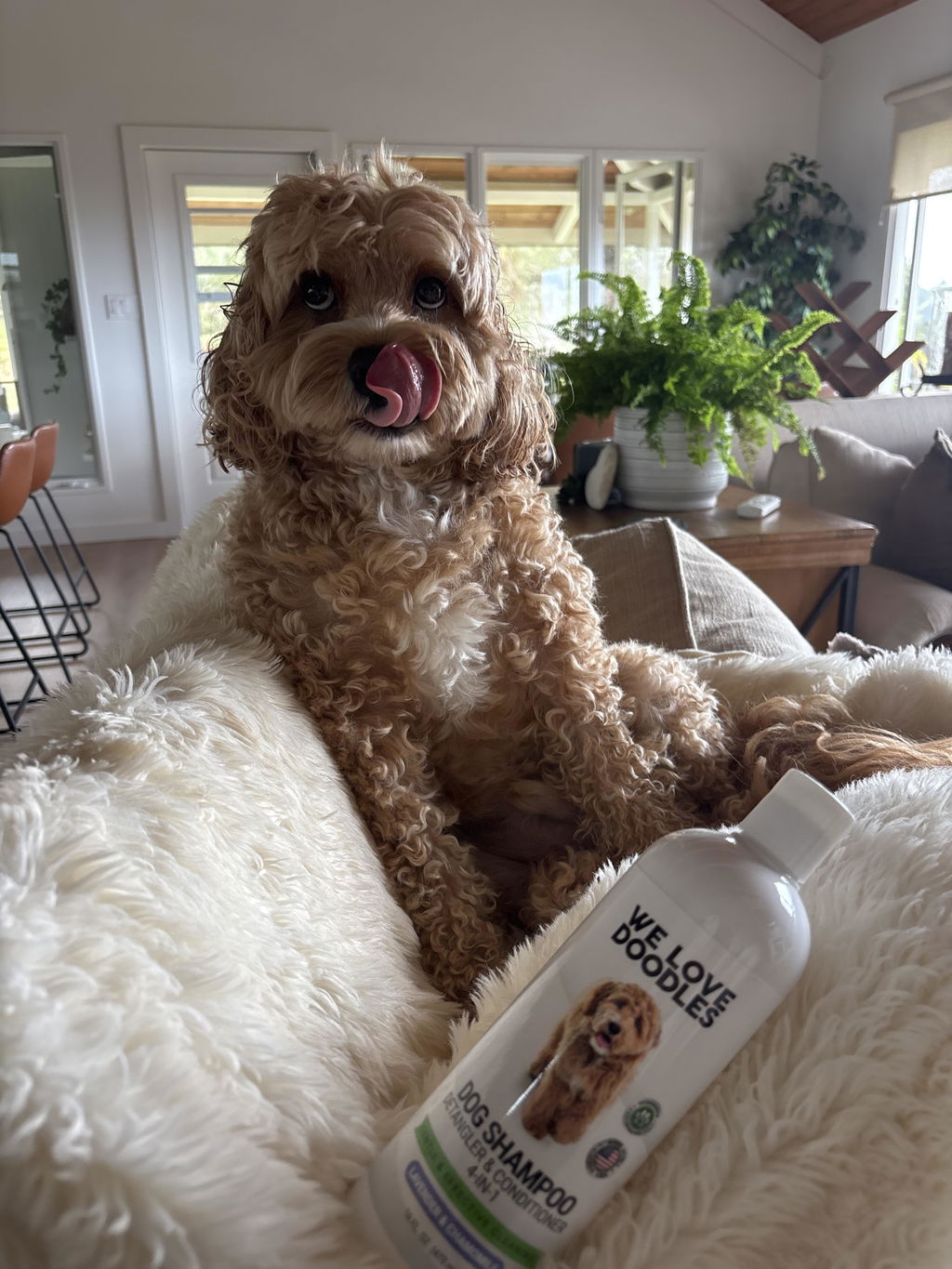
We Love Doodles’ Deshedding and Waterless Shampoos are designed for Doodle-type coats but work wonderfully for all shedding breeds — gentle on skin, strong on results.
4. Manage Stress and Anxiety
Stress hormones can trigger increased shedding.
Common causes include:
-
Loud noises (fireworks, thunderstorms)
-
Changes in household routine
-
Separation anxiety
To minimize stress shedding:
-
Keep consistent routines
-
Provide enrichment (toys, sniff walks, puzzle feeders)
-
Use calming aids like lavender sprays or anxiety wraps
A 2023 PLOS One study found that dogs with stable daily routines and interactive activities shed significantly less than those exposed to unpredictable environments.
5. Maintain Regular Grooming — or Try DIY Grooming at Home
Some shedding is inevitable, but maintenance makes all the difference.
If you visit a professional dog groomer, ask for de-shedding treatments or a full coat blowout.
However, more owners now prefer DIY grooming at home for convenience and savings. Once you learn how to use modern tools (like grooming vacuums), you’ll realize home grooming isn’t as messy or intimidating as it used to be.
For anxious or difficult dogs, grooming at home often feels safer and calmer — no loud dryers or strange smells. Many doodle owners report that regular at-home brushing reduced visible shedding by up to 80% within weeks.
👉 Check out our Dog Grooming Tools Collection for home-friendly kits recommended by Doodle owners and professional groomers alike.
Case Study: How One Owner Reduced Extreme Shedding in Her Goldendoodle
“Bailey,” a three-year-old Goldendoodle, used to leave tumbleweeds of fur across her owner’s hardwood floors.
After consulting her vet (to rule out health issues), her owner tried three changes:
-
Switched to a salmon-based dog food high in omega-3s.
-
Began brushing every two days using a slicker brush paired with a vacuum grooming system.
-
Reduced baths from weekly to every six weeks with a mild deshedding shampoo.
Within a month, Bailey’s coat appeared shinier, mats decreased, and fur cleanup dropped by 70%.
Her owner said, “I used to dread vacuuming daily. Now I brush for 10 minutes, and we’re good for the week.”
Final Thoughts
Shedding is normal but extreme shedding in dogs isn’t something you have to just accept.
By understanding what triggers your dog’s shedding and making small adjustments in diet, stress management, and grooming, you can reclaim your clean home (and your sanity).
The best part? You don’t need to spend hours brushing or visit groomers weekly. With smarter grooming tools like the We Love Doodles Dog Grooming Vacuum Kit, shedding control becomes effortless and your dog’s coat stays healthy, soft, and radiant.
So the next time your dog’s hair covers your couch, remember: shedding isn’t the enemy neglecting routine care is. With the right tools and habits, your dog can look and feel their best year-round.
👉 Next up: Professional Groomer vs. DIY Grooming — Which Saves More (Time, Money, and Hair Mess)?