Prepare the coat
Begin with a dry coat. Lightly mist with detangling spray when extra slip is needed.
Avoid brushing a soaking-wet coat.
We Love Doodles brush & comb guide
The right brushing routine helps prevent tangles, remove loose fur, and keep your dog's coat soft and easier to maintain.

Why it matters
Regular brushing supports your dog's comfort while helping you stay ahead of tangles, shedding, and buildup.
Consistent brushing separates the coat before small knots develop into difficult mats.
Brushing collects shed hair before it gets trapped in the coat — or ends up around your home.
Gentle brushing spreads the coat's natural oils for a softer, healthier-looking finish.
A regularly brushed coat is easier to bathe, dry, trim, and maintain between appointments.
HOW TO
Different tools do different jobs. Many dogs need more than one in a single routine.

HOW TO
Begin with a dry coat. Lightly mist with detangling spray when extra slip is needed.
Avoid brushing a soaking-wet coat.
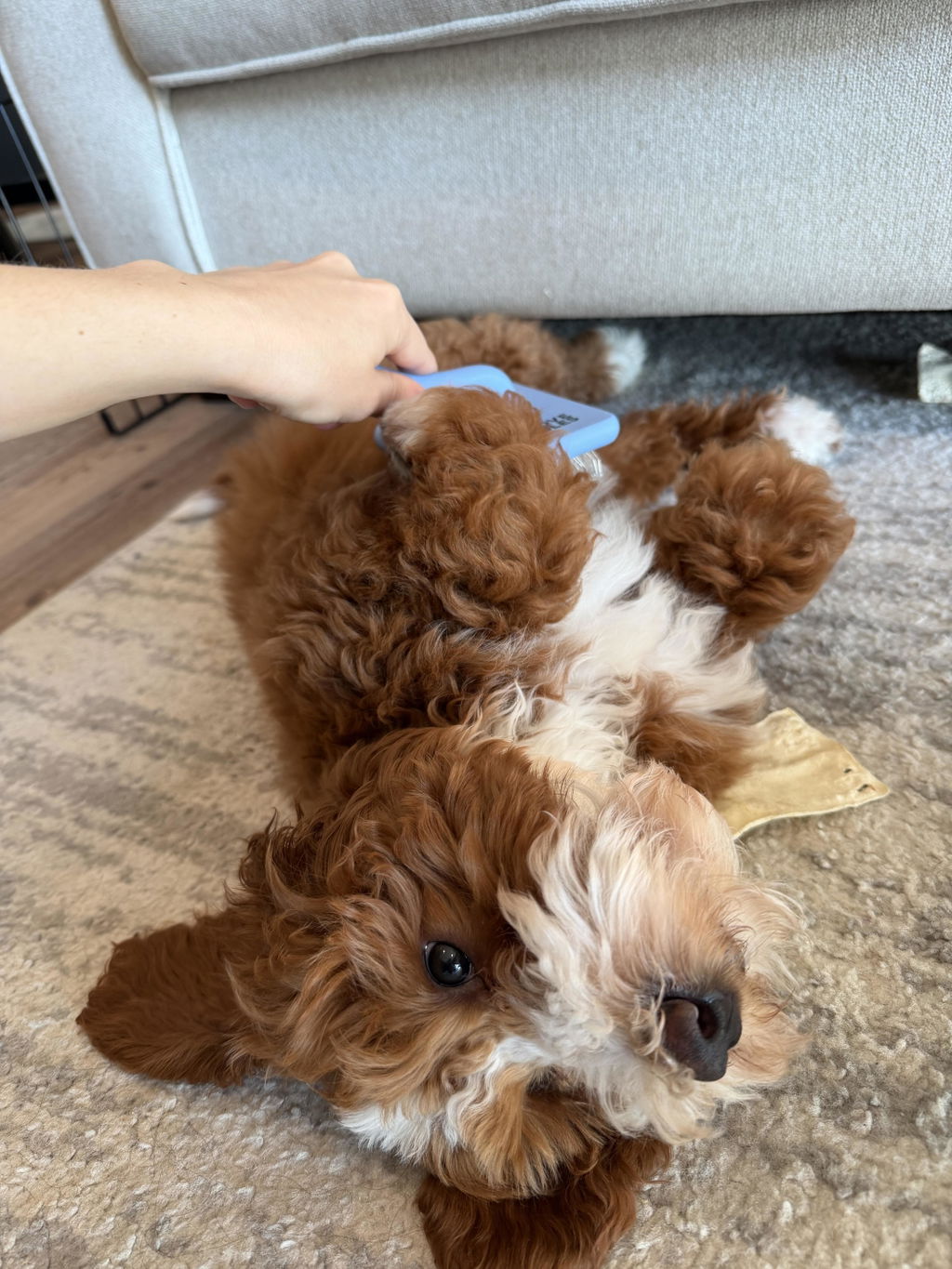
Separate the fur into small, manageable sections. Working in sections lets you reach the coat close to the skin instead of brushing only the surface.
Begin near the feet and work upward. Lift a small layer of fur and brush from close to the skin toward the ends with gentle, controlled strokes.
Pay extra attention behind the ears, under the collar, beneath the legs, around the tail, and anywhere a harness rubs.
Finish by passing a grooming comb through each section. If the comb catches, return to that area with your brush or detangling tool.

How often
Four coat types, four rhythms.
Brush every one to two days. Check high-friction areas daily, especially when the coat is long.
Brush three to four times per week, or more often when tangles develop easily.
Brush two to three times per week, and more often during seasonal shedding.
Brush about once per week to collect loose fur and support natural shine.
Your dog's ideal schedule may vary with coat length, activity level, and how quickly tangles develop.
Better together
Everything this guide asks for, in one place.
Instantly Detangle Your Dog's Coat with America's #1 Doodle Detangler Spray Say...
10-Piece Kit Complete System Save Hundreds Ultimate Dog Grooming Pack: Complete Professional...

FREE GROOMING GUIDE
Get the complete We Love Doodles At-Home Grooming Guide, including bath steps, brushing tips, coat-care guidance, and common mistakes to avoid.
By signing up, you agree to receive grooming tips, product education, and occasional offers from We Love Doodles. Unsubscribe anytime.
Your feedback helps other dog parents find the right tools for their routine.
It depends on coat type and length. Curly, wavy, and long coats may need brushing every one to two days, while shorter coats may only need weekly brushing. Check high-friction areas such as behind the ears, under the collar, and beneath the legs more frequently.
Use a slicker brush to separate curly or dense coats, remove loose fur, and work through light tangles. A pin brush is better for gently smoothing, fluffing, and finishing longer coats. Follow with a grooming comb to check for hidden tangles.
A brush separates, smooths, and removes loose fur from the coat. A grooming comb reaches through the coat to identify tangles closer to the skin. The comb is best used after brushing, to check your work.
Brush a dry coat, or one lightly misted with Detangler Spray. A soaking-wet coat is more vulnerable to stretching, pulling, and breakage. See the detangler guide for full application instructions.
Pass a grooming comb through the coat from close to the skin through to the ends. If the comb moves smoothly without catching, the section is properly brushed.
Stop rather than pulling through it. Support the fur near the skin, add Detangler Spray if needed, and work through the knot gradually from the ends toward the base. Visit the dematting guide for stubborn or compacted tangles.
Begin with short sessions in a calm environment and reward relaxed behaviour. Use gentle pressure, avoid repeatedly brushing sensitive areas, and stop if your dog shows pain or significant discomfort. Increase the length of each session gradually as your dog becomes more comfortable.
EXPLORE MORE PRODUCTS
Explore grooming products created to make bathing, brushing, and caring for your dog's coat a little easier.
Shop by Category